No-Cook Emergency Foods: What to Eat When the Power Is Out
July 8, 2026 · 3min read · Reviewed against FEMA & CDC guidance
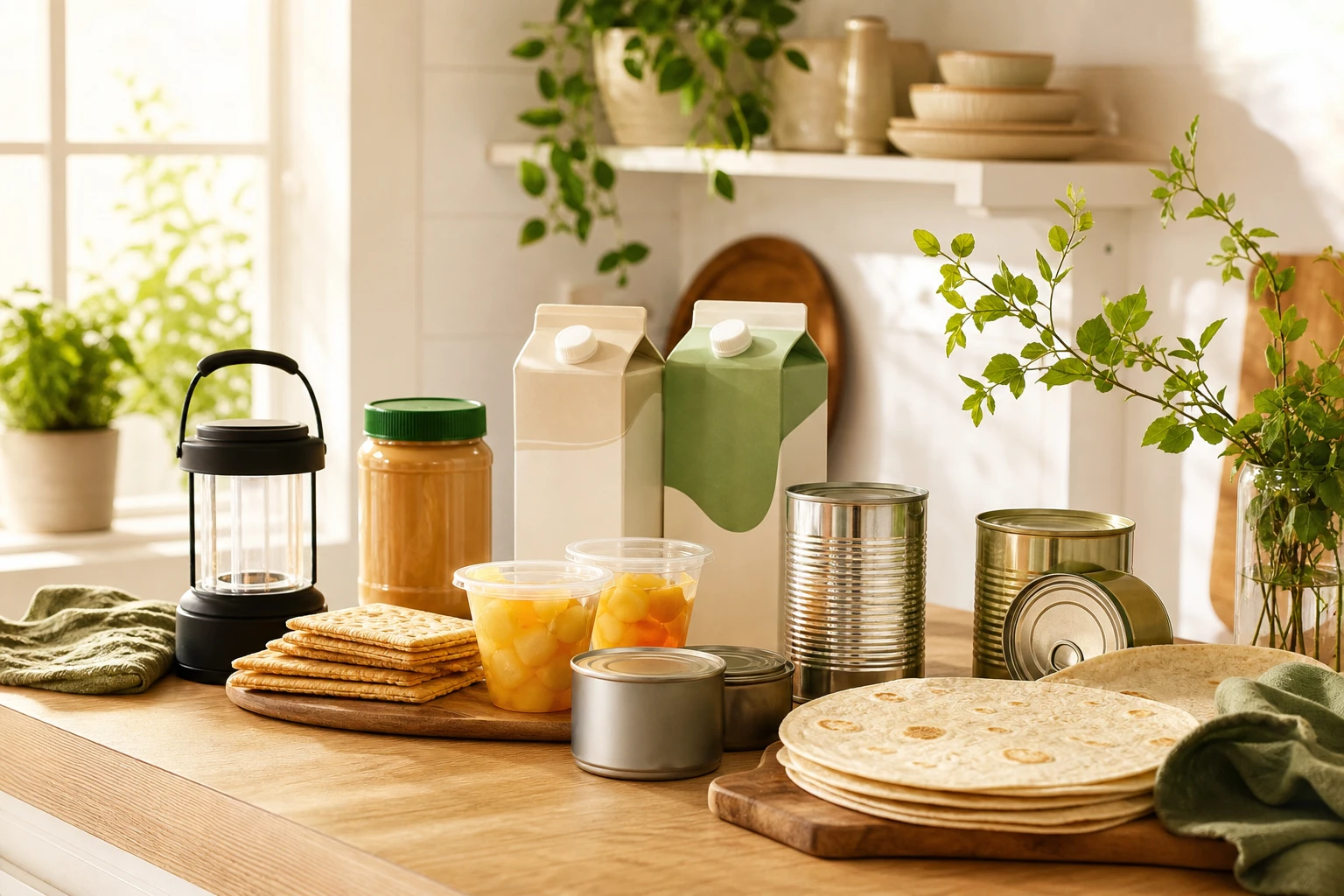
Picture hour 30 of a power outage. The stove is electric, the microwave is a paperweight, and everyone is hungry at the same time. What is dinner? If your emergency food plan quietly assumes cooking, this is the moment it falls apart.
(If you're at hour 30 for real, the live power outage map shows what's reported in your state and how much of the fridge and freezer is still worth eating.)
The fix is a 3-day no-cook menu: about 2,000 calories per person per day, per FEMA's planning figure, from foods that need no heat, no refrigeration, and ideally no can opener. Here is exactly what that looks like, meal by meal.
What makes a good no-cook food?
Four tests, and most pantry staples pass at least three:
- Ready to eat cold. Canned beans, tuna, and chili are fully cooked in the can; "needs heating" is a preference, not a requirement.
- Shelf-stable for a year or more. You want to buy this once a year, not babysit it.
- Opens without power. Pop-top cans, jars, pouches, and boxes. Keep a manual can opener taped inside the bin for everything else.
- Familiar. An outage is the wrong week to discover nobody likes sardines. Stock what your household already eats.
Food and water calculator
How much food and water does your household need?
Adults
Children
For how long
You'd need
98,000calories
plus 56 gallons of water, around $185 to buy.
For 2 adults, 2 children, 2 weeks.
That's the target. Provision Planner counts what you already have and shows you what's left to buy.
See how close you areThe 3-day no-cook menu
Amounts are per person. Multiply by your household and you have a shopping list.
| Meal | Menu | Roughly |
|---|---|---|
| Breakfast | Granola or cereal + shelf-stable milk, fruit cup, coffee (cold brew packets work cold) | 500 cal |
| Lunch | Peanut butter and honey on crackers or tortillas, nuts, dried fruit | 600 cal |
| Dinner | Canned chili, beans, or tuna + tortillas, canned vegetables, fruit | 650 cal |
| Snacks | Trail mix, jerky, granola bars, chocolate | 300 cal |
A few notes from real outages: tortillas beat bread (they keep for weeks unopened and do not crush), pop-top fruit cups do double duty as morale for kids, and 1 gallon of water per person per day still applies on top of the menu, following CDC guidance.
The shopping list version
For one adult, three days: 1 jar peanut butter, 1 box crackers, 1 pack tortillas, 3 pop-top cans of protein (chili, beans, tuna, chicken), 3 cans or cups of fruit, 2 cans of vegetables, 1 box cereal or granola, 3 single-serve shelf-stable milks, nuts, dried fruit, a few bars, and something sweet. Total cost runs $35 to $50 and it all fits in one bin.
Our pick order for the protein cans is in the best canned foods for emergencies, ranked by calories per dollar and shelf life.
What about the food already in the fridge?
Eat it first, in order: fridge, then freezer, then the no-cook bin. The safety windows from the USDA are strict: an unopened fridge keeps food safe for about 4 hours, a full freezer for 48. The full decision table, including what to keep and toss, is in our power outage food safety guide.
And if the outage stretches past a couple of days, cooking becomes possible again with a camp stove or grill, safely outdoors only. That upgrade path is covered in emergency cooking without power. The no-cook bin is not instead of that gear; it is what keeps dinner calm while you set it up, and the fallback if fuel runs out.
One honest warning about no-cook bins
They get eaten. Not in emergencies, but on random Tuesdays: the granola bars migrate to lunchboxes, the peanut butter gets opened, the fruit cups vanish one at a time. Six months later the bin holds crackers, two cans of green beans, and a note of apology.
That quiet shrinkage is exactly what Provision Planner catches. Scan the bin's contents in once, and it tracks what is actually still there, what is expiring, and how many days of food your household really has right now, not the number from the day you went shopping. When someone raids the trail mix, your days-covered number moves, and you know to restock before the next storm does the math for you.
Frequently asked questions
- What can you eat when the power is out and you can't cook?
- Ready-to-eat pantry foods: canned meats and beans, peanut butter, crackers, tuna and chicken pouches, canned fruits and vegetables, granola bars, nuts, and shelf-stable milk. None need power, refrigeration, or even a can opener if you buy pull-tab cans.
- What are the best no-cook emergency foods?
- Peanut butter, canned proteins (tuna, chicken, beans), nut butters, trail mix, crackers, canned fruit, granola bars, and shelf-stable milk. They're calorie-dense, need no preparation, and store for a year or more.
- How much no-cook food do you need per person?
- Plan on about 2,000 calories per person per day. For a three-day no-cook window that's roughly 6,000 calories each, achievable with a mix of canned meals, peanut butter, crackers, and snacks kept in a dedicated bin.
You did the reading. Now get your number.
Provision Planner does this article's math for your real household, automatically, and keeps it current as supplies come and go.