How Long Does a Freezer Stay Cold Without Power?
June 27, 2026 · 3min read · Reviewed against FEMA & CDC guidance
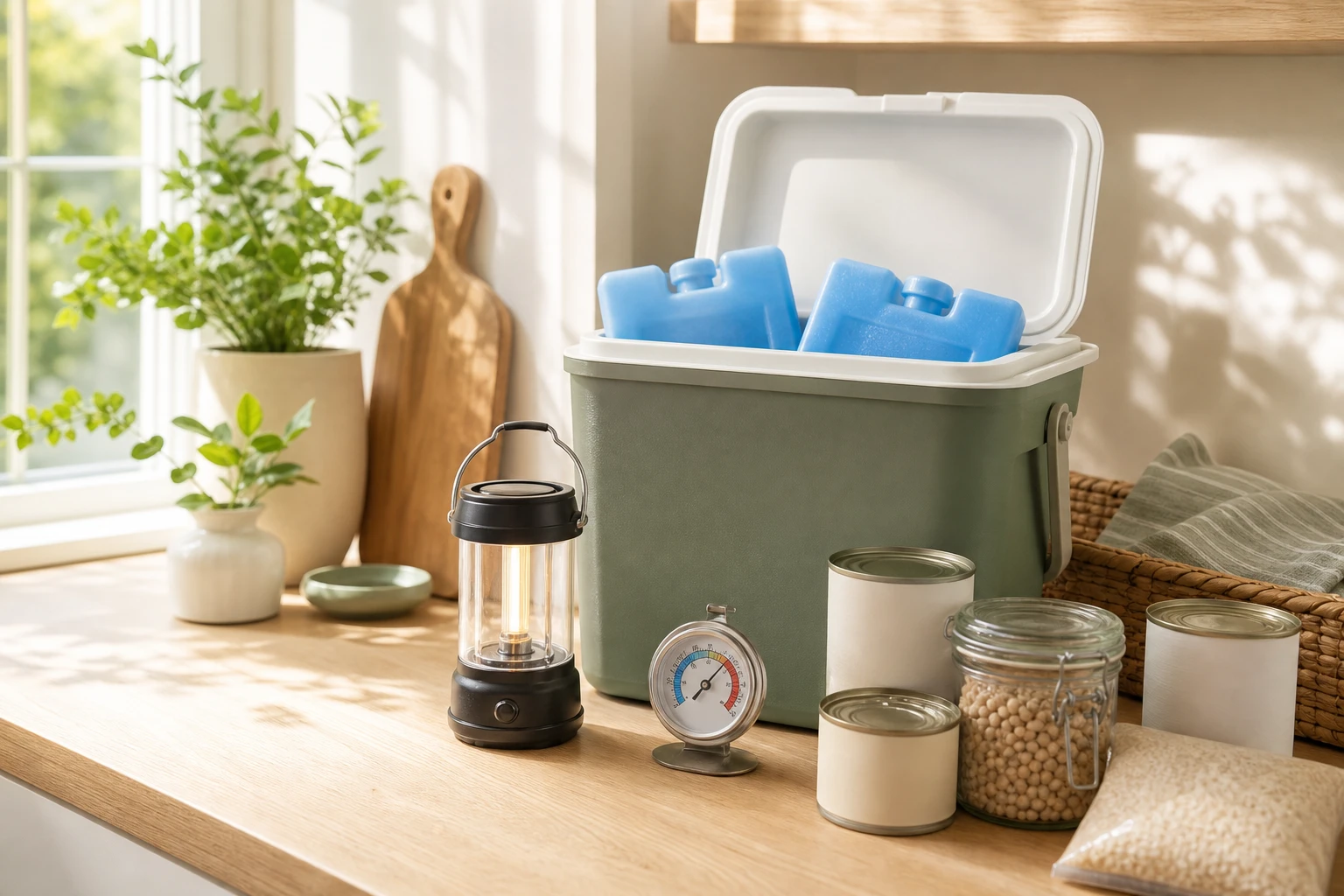
The power just went out. The first food decision you make is the biggest one: stop opening the doors. Everything below assumes you mostly did.
If you want to know whether it's just you or the whole county, the live power outage map shows what's reported near you and runs these same timers against how long you've actually been out.
The timelines that matter
Per USDA guidance:
- Refrigerator: 4 hours. Unopened, a fridge holds safe temperatures for about four hours. After that, perishables (meat, dairy, eggs, leftovers, cut produce) that have spent more than 2 hours above 40°F need to go.
- Full freezer: 48 hours. Half-full freezer: 24 hours. Unopened, a packed freezer is a giant ice block that defends itself. Food that still has ice crystals or reads 40°F or below can be safely refrigerated or refrozen.
| Outage length | Fridge | Freezer (full) |
|---|---|---|
| Under 4 hours | Fine, keep doors shut | Fine |
| 4 to 24 hours | Perishables at risk; use cooler + ice | Fine if unopened |
| 24 to 48 hours | Toss perishables | Check for ice crystals |
| 48+ hours | Toss perishables | Toss anything thawed and warm |
What actually decides whether you get 48 hours or 20
The 48 hour number assumes a full freezer that nobody opens. Four things move it, and most of them are in your control before the power ever goes out.
How full it is. This is the big one, and it's why the guidance splits at half full. Frozen food keeps other frozen food cold, so a packed freezer is a single large ice block and an empty one is a box of cold air. If yours runs half empty, fill the gaps with jugs of water. They freeze solid, cost nothing, and become drinking water later.
Chest or upright. Cold air sinks, so a chest freezer holds it when the lid is shut while an upright dumps most of it every time the door swings. A chest freezer routinely beats the 48 hour figure.
How warm the room is. A freezer in an unheated garage in January will hold far longer than the same freezer in a kitchen in August. In a summer outage, assume the short end of every number here.
How often you open it. Each opening costs real hours. Decide what you need before you open the door, take it all at once, and shut it.
A cheap appliance thermometer left inside settles every argument afterwards. When the power comes back, the number you need is the temperature the food actually reached, and the length of the outage is only a rough proxy for it. Above 40°F for more than two hours and it goes, whatever it looks like.
What survives a long outage at room temperature
More than people think: unopened condiments and most sauces, hard cheeses, butter for a day or two, bread, whole fruits and vegetables, peanut butter, and everything in your canned and dry storage. This is exactly why the 2-week shelf-stable supply exists: it's the food that doesn't care about the grid.
The rules that prevent a bad week
- Never taste food to decide. Bacteria that cause food poisoning don't announce themselves in flavor or smell. When in doubt, throw it out.
- Use a thermometer, not a guess. An appliance thermometer in the fridge and freezer turns "I think it's fine" into a reading. 40°F is the line.
- 2 hours is the perishable clock. Any perishable above 40°F for more than 2 hours is done, whether that happens during an outage or on a countertop.
Tricks that buy hours
- Freeze water bottles and bags now. A fuller freezer lasts longer, and the ice becomes drinking water. (This is a standard hurricane-watch move.)
- Group frozen food together so it insulates itself.
- Move perishables to a cooler with ice at hour 3 of the fridge window, not hour 7.
- Know where to buy dry ice before you need it: 50 pounds holds a full freezer for two days.
The insurance policy is upstream
Food safety rules decide what you lose. What you have left afterward is decided months earlier, by the shelf-stable storage that never needed the fridge. Provision Planner tracks that layer: your canned goods, dry staples, and water, with expiration dates handled and a live count of how many days your household can run with the power off. The outage stops being a food crisis and becomes an inconvenience.
Frequently asked questions
- How long does food last in the fridge without power?
- About 4 hours if you keep the door closed. After that, perishable food above 40 degrees for more than 2 hours should be tossed. A full freezer holds safe temperatures about 48 hours, or 24 hours if half full.
- What food is safe to eat after a power outage?
- Shelf-stable and unopened canned foods are always fine. Refrigerated food is safe if it stayed below 40 degrees or was out under 2 hours. When in doubt, throw it out; you can't judge safety by smell or taste for many pathogens.
- How do you keep food cold during a power outage?
- Keep fridge and freezer doors shut, group frozen items together, add bags of ice or frozen water jugs, and use coolers for the items you'll need first. A full freezer stays cold far longer than an empty one.
Food and water calculator
How much food and water does your household need?
Adults
Children
For how long
You'd need
98,000calories
plus 56 gallons of water, around $185 to buy.
For 2 adults, 2 children, 2 weeks.
That's the target. Provision Planner counts what you already have and shows you what's left to buy.
See how close you areYou did the reading. Now get your number.
Provision Planner does this article's math for your real household, automatically, and keeps it current as supplies come and go.