How to Cook Without Power: Safe Options, Ranked
May 12, 2026 · 2min read · Reviewed against FEMA & CDC guidance
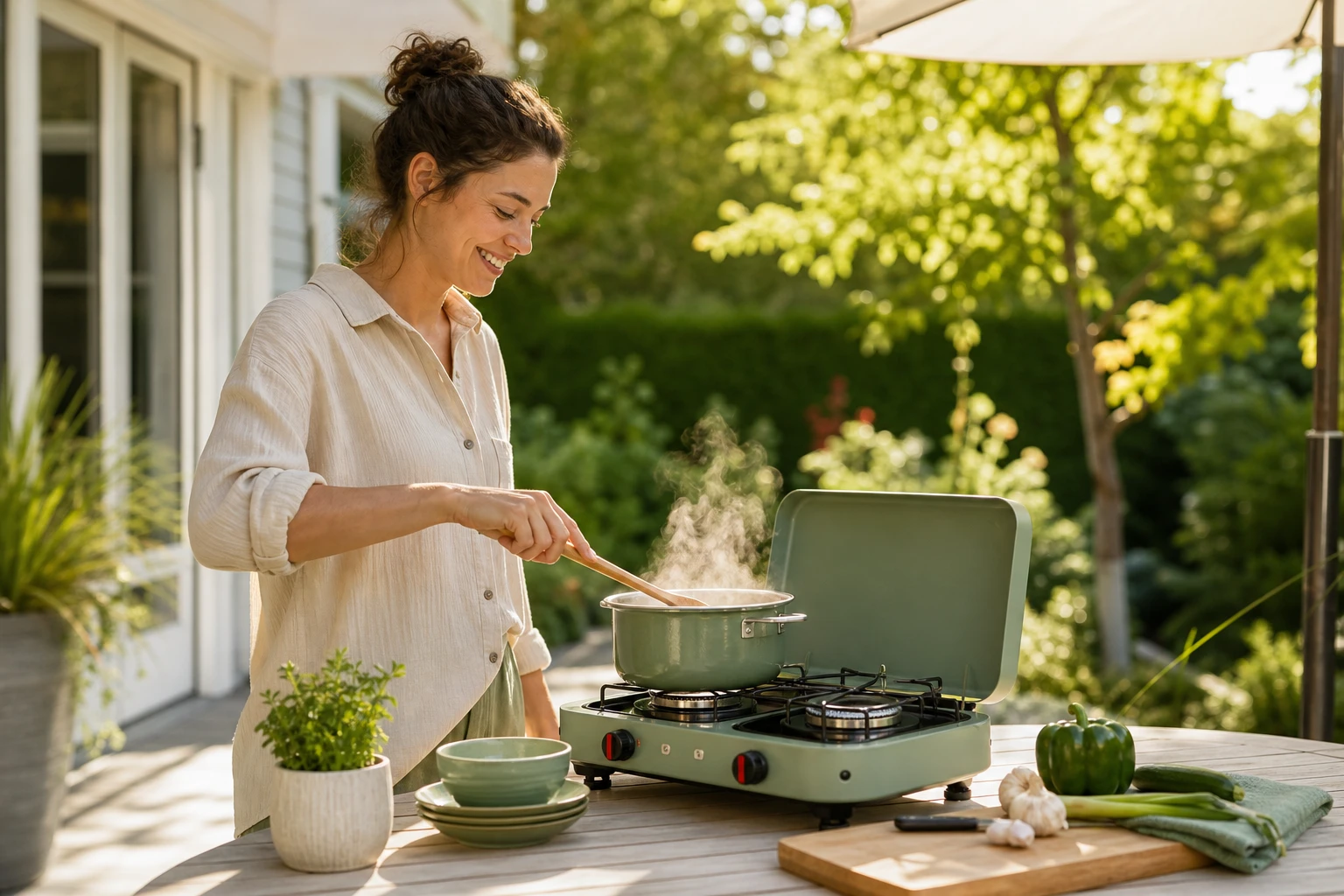
Every long outage produces two kinds of stories: families who ate hot meals for two weeks, and carbon monoxide tragedies from someone cooking indoors with the wrong gear. The difference is knowing the ranking before the lights go out.
How long you'll be cooking this way is worth knowing before you start rationing fuel. The live power outage map carries restoration estimates for the utilities that publish them.
The one rule above all: combustion cooking happens outside. Charcoal and camp fuel indoors are how most outage CO deaths happen, and CO gives no warning you can smell.
If you are counting on a power station for any of this, work out its runtime first. Induction plates and microwaves empty one in minutes.
The ranking
1. Propane grill or camp stove (outdoors). The workhorse. If you own a grill, you own an outage kitchen; a two-burner camp stove is the upgrade. Keep two spare propane tanks through storm season and you can cook for weeks.
2. Single-burner butane stove. The apartment answer: compact, cheap, and the one exception many fire authorities tolerate indoors near a cracked window because butane burns clean in short sessions. Canisters are small; stock a dozen. (More apartment-specific prep here.)
3. Rocket stove or fire pit (outdoors). Burns twigs, costs little, boils water hard. Slower, smokier, weather-dependent, and worth practicing once before you need it.
4. Solar oven. Zero fuel, zero flame, genuinely bakes on a clear day. Slow and sun-dependent, so it's a supplement, not the plan.
5. Sterno and fondue-class heat. Warms a can, keeps coffee alive. Fine for morale; don't plan a family's meals on it.
Never, in any form: charcoal indoors, camp stoves in closed rooms, generators anywhere but outside and 20 feet from windows. This paragraph is the whole reason this article exists.
Make the food match the stove
Outage cooking favors one-pot, boiling-water meals: rice, pasta, oats, canned meals from tier one, soups, and coffee. If your two-week supply can all be made with a single pot of boiling water, your fuel lasts twice as long. And a thermos is the unsung hero: boil once, keep it hot for hours.
Fuel is a supply too
Families count cans and forget to count burns. Log your propane tanks, butane canisters, and fuel alongside food and water in Provision Planner and the coverage number reflects the whole picture: not just what you'd eat, but whether you can cook it.
Frequently asked questions
- How do you cook without power in an emergency?
- Use a fuel-based stove outdoors: a propane camp stove, butane burner, or charcoal or gas grill. Indoors, stick to safe canned-fuel (Sterno) setups with ventilation. Never use a grill, camp stove, or generator inside; the carbon monoxide is deadly.
- Is it safe to use a grill or camp stove indoors?
- No. Charcoal and gas grills, camp stoves, and any combustion appliance release carbon monoxide that kills in enclosed spaces every year. Only cook with them outdoors or in a fully ventilated open area away from windows and doors.
- What's the safest way to cook during a power outage?
- An outdoor propane or butane camp stove is the safest practical option: cheap, controllable, and clean-burning in open air. Pair it with no-cook and one-pot foods so you use minimal fuel, and always keep cooking outside.
Food and water calculator
How much food and water does your household need?
Adults
Children
For how long
You'd need
98,000calories
plus 56 gallons of water, around $185 to buy.
For 2 adults, 2 children, 2 weeks.
That's the target. Provision Planner counts what you already have and shows you what's left to buy.
See how close you areYou did the reading. Now get your number.
Provision Planner does this article's math for your real household, automatically, and keeps it current as supplies come and go.