The Best Canned Foods for Emergencies, Ranked by What Matters
May 26, 2026 · 2min read · Reviewed against FEMA & CDC guidance
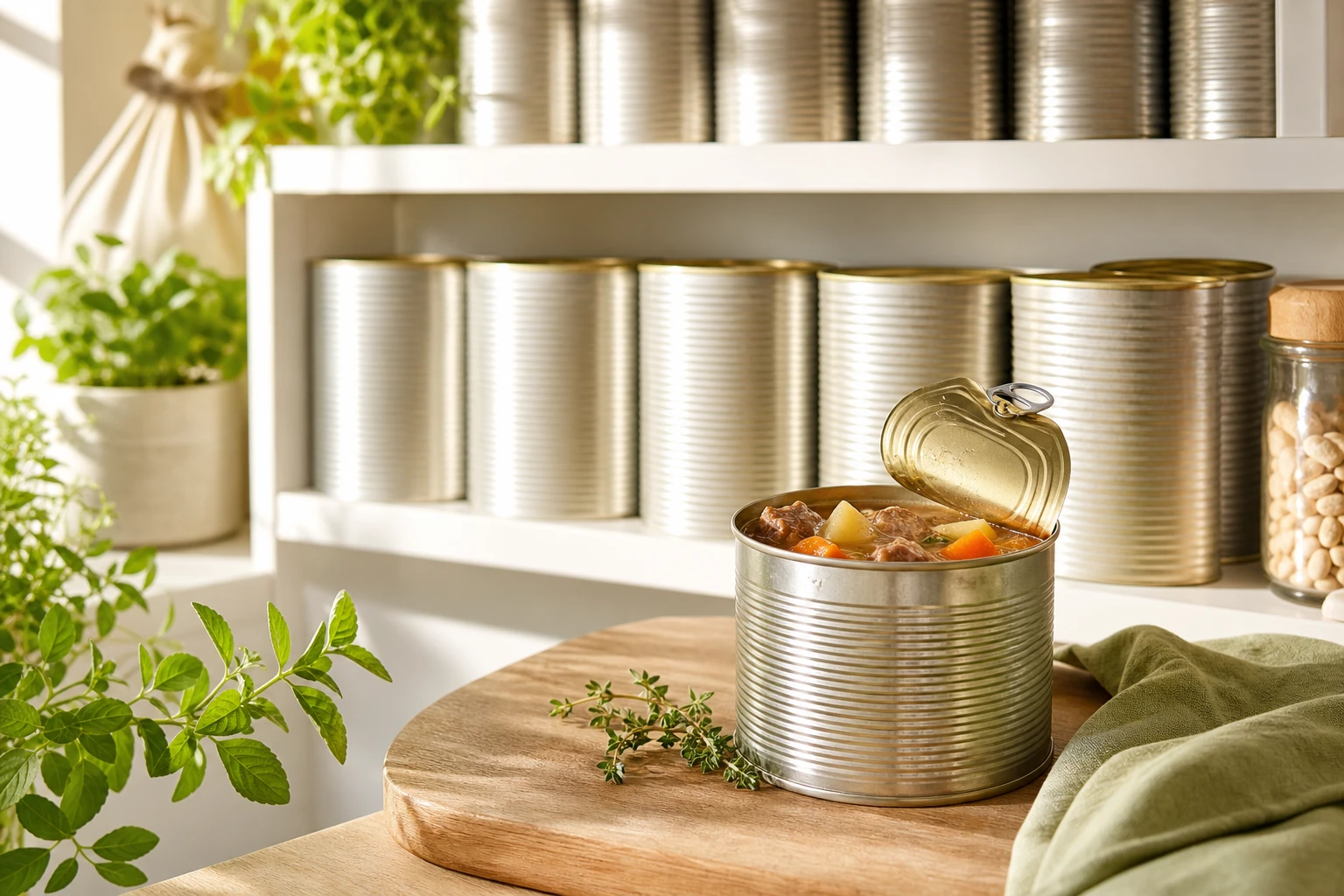
Every emergency pantry leans on cans, but cans are not created equal: a can of chili carries five times the calories of a can of green beans in the same shelf space. When storage room and budget are finite, ranking matters. Here's the honest hierarchy. Before a big shop, it is worth a look at what has been recalled recently, since recalls cluster in exactly these shelf-stable categories.
Tier 1: dense meals in a can
The workhorses: real calories, protein, and fat with zero prep.
| Canned food | Approx. calories per can | Why it earns shelf space |
|---|---|---|
| Chili with meat and beans | 500 to 600 | Complete meal, high protein |
| Beef stew | 400 to 500 | Meal, morale, familiar |
| Corned beef hash | 600 to 700 | Densest common option |
| Baked beans | 450 to 550 | Cheap, filling, kids eat them |
| Canned pasta meals | 400 to 500 | Zero-cook comfort for kids |
Tier 2: proteins
- Peanut butter (jar, not can, but it belongs here): ~2,500 calories a jar, no cooking.
- Canned chicken, tuna, salmon: lean protein; pair with rice from your staple storage.
- Canned ham and similar: salty, dense, lasts practically forever.
- Coconut milk: the sleeper pick: about 750 calories a can and it makes rice-and-beans taste like dinner.
Tier 3: vegetables, fruits, and helpers
Corn and potatoes lead vegetables on calories; tomatoes make everything else edible; canned fruit is dessert and morale. Broth and bouillon turn staples into soup. These round out nutrition but should be the minority of your can budget.
What to skip
- Watery soups as a staple: many are under 200 calories a can. Fine for comfort, terrible as a plan.
- Anything your family won't eat on a normal Tuesday, the first rule of stockpiling.
- Dented-seam bargain cans: damaged seams void the seal, and the safety rules are not negotiable.
Two practical notes: the printed date is a quality suggestion, not an expiration (intact low-acid cans stay safe for years past it), and every can plan dies without two manual can openers.
Ranked cans still need counting
A well-chosen can wall looks impressive right up until you're rebuying chili you already own while the fruit quietly ages out. Provision Planner keeps the wall honest: scan cans in with the barcode scanner, and it tracks quantities and dates and tells you exactly how many days your family's supply buys, updated every time a can leaves the shelf.
Frequently asked questions
- What are the best canned foods for emergencies?
- Calorie-dense, ready-to-eat cans win: chili, stews, canned meats like chicken, tuna, and salmon, baked beans, and canned pasta. Add peanut butter and canned fruit in juice. These need no cooking, deliver real protein and calories, and store for years.
- What canned foods last the longest?
- High-acid cans like tomatoes and fruit stay best-quality about 18 months, while low-acid cans (meats, vegetables, beans) keep 2 to 5 years and remain safe well beyond that if the can is undamaged. Store cool and dark and rotate by date.
- What canned foods should you avoid stockpiling?
- Skip cans that are mostly water or air, like watery vegetables, plain broth used as a calorie source, and diet products. They take shelf space without delivering the calories or protein an emergency supply needs.
Food and water calculator
How much food and water does your household need?
Adults
Children
For how long
You'd need
98,000calories
plus 56 gallons of water, around $185 to buy.
For 2 adults, 2 children, 2 weeks.
That's the target. Provision Planner counts what you already have and shows you what's left to buy.
See how close you areYou did the reading. Now get your number.
Provision Planner does this article's math for your real household, automatically, and keeps it current as supplies come and go.