Quick answer
The car version of preparedness is one tote in the trunk: warmth that does not depend on the engine, calories and water that tolerate freezing, light, a charged battery bank, and a shovel. Add the two rules that do the real work, stay with the car and keep the exhaust pipe clear, and a highway shutdown becomes an uncomfortable story with a warm ending.
This is a kit scenario: one trunk tote covers the whole household on the road.
Stay
The car is shelter, beacon, and address
Exhaust
Clear it before every idle stretch
10 min/hr
Engine time that keeps warm safely
Half tank
Winter fuel floor
How a stranding actually unfolds
The closure
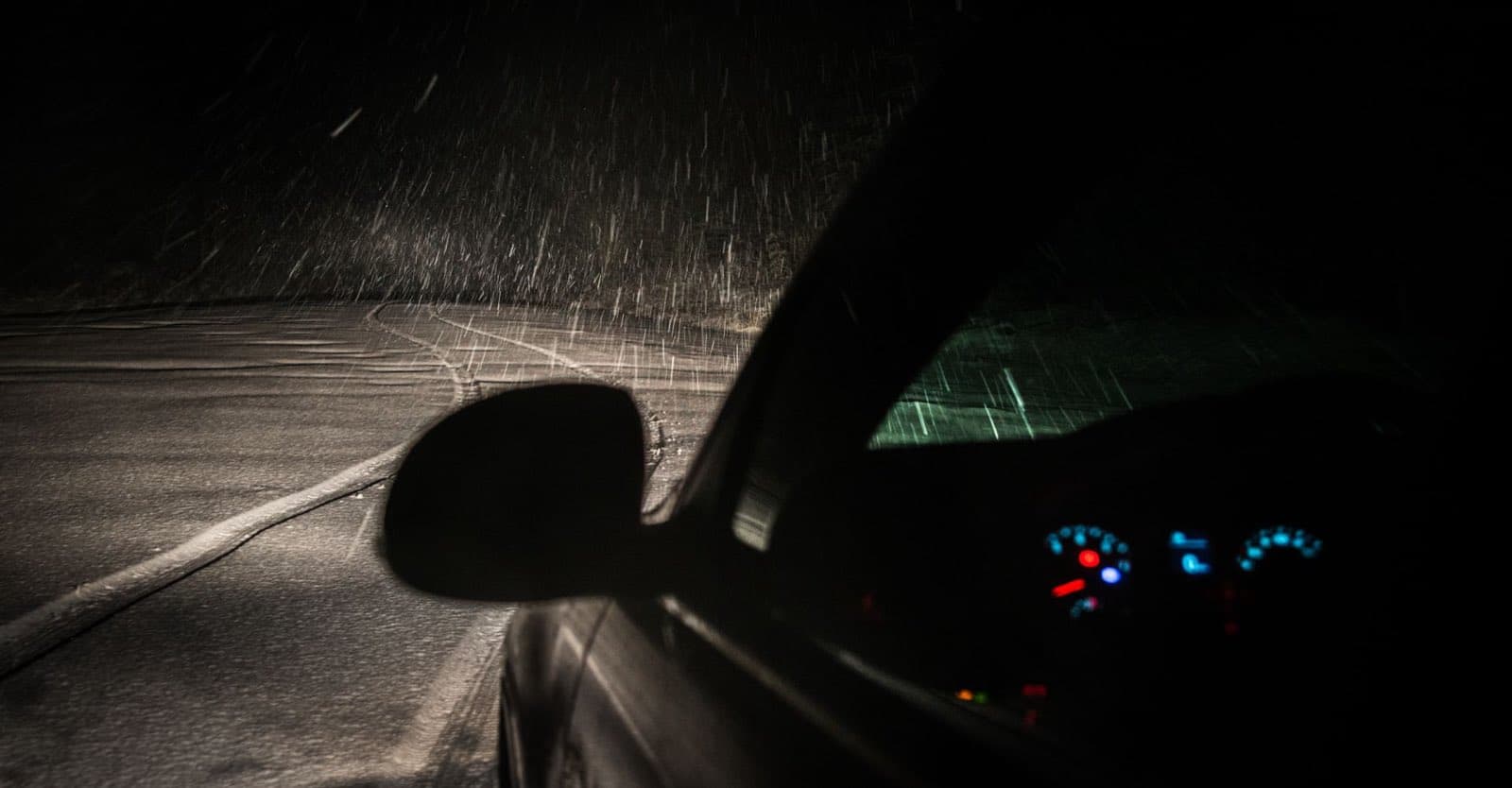
A crash, a whiteout, a frozen grade: traffic stops and does not restart. The first hour feels like a delay, not an emergency, which is exactly when the kit decisions start.
Hours 1 to 3
Engine cycles ten minutes per hour for heat, exhaust checked each cycle, layers on before anyone is cold. 911 gets your mile marker; family gets your pin.
The long middle
Snacks, water sips, hand warmers, one cracked window for air. The car stays visible: dome light during search hours, antenna cloth by day.
The reach
Plows and patrols work closed roads in passes. Cars with people in them get found; footprints leading away into a whiteout are the searches that run long.
Play it out
One closed interstate, three decisions
A ground blizzard shuts I-80 with you on it, 40 miles from town. Play the night.
Scene 1 of 3
4:50pm, December. The snow went horizontal ten miles back, and now traffic is fully stopped, hazards blinking in both directions. Radio says the interstate is closed ahead. You have half a tank, a phone at 60%, and whatever the trunk holds.
Prefer to read it straight through?
Scene 1
4:50pm, December. The snow went horizontal ten miles back, and now traffic is fully stopped, hazards blinking in both directions. Radio says the interstate is closed ahead. You have half a tank, a phone at 60%, and whatever the trunk holds.
If you idle continuously with the heat on. comfort first: Toasty for two hours, then the gauge does math at you: continuous idling drinks the half tank by midnight, and the heater dies with it. Also nobody has checked the exhaust pipe since the drifts started building, which is the part that actually matters.
If you cycle the engine: ten warm minutes per hour, exhaust cleared each start: First cycle: walk back, kick the pipe clear of packed snow, ten minutes of heat, off. The cabin holds warmth in the blankets and layers between cycles, the fuel lasts past dawn on paper, and the CO risk is handled every single cycle.
Field note: A blocked exhaust pipe backs carbon monoxide into the cabin, and drifting snow blocks pipes fast. Clear it before every idle period: it is the single most important habit in a winter stranding.
Scene 2
7:30pm. Three hours in. The phone shows a gas station glowing 2.5 miles ahead on the map, and the snow has eased to merely heavy. Two people from the pickup ahead just set off walking toward it.
If you join them. motion beats waiting: A half-hour walk on a summer shoulder is a multi-hour ordeal in wind-drift dark, and the whiteout erases the road's edges a mile in. The station was also closed. The searchers who eventually find walkers spend the night doing it; the car people are asleep by then.
If you stay with the car, report position, get visible: 911 logs your mile marker, the family group chat gets a dropped pin and a photo of the snack situation for morale, and the bright cloth goes on the antenna. The car is shelter, beacon, and street address in one object. Searchers drive right to it.
Field note: Stay with the vehicle is the closest thing winter rescue has to an iron rule: cars are visible, trackable, and windproof. Distances that read as walkable on a map are not, in a whiteout, at night.
Scene 3
10pm. Settled in for the night: engine cycles working, everyone bundled. The six-year-old is somewhere between adventure and meltdown, and the last granola bar just became a negotiation.
If you ration silence and hope for sleep: Cold plus boredom plus hunger compounds into the worst night of the year, even though nothing dangerous happens. The kit kept everyone safe; nobody thought to make it bearable. You all get out fine and agree never to speak of it.
If you deploy the morale layer of the kit: snacks, warmers, the stupid card game: Hand warmers become mittens' best friends, the emergency chocolate achieves legend status, and twenty questions runs to question two hundred. The plow reaches you at 5:40am and finds a car full of people asleep, warm, and weirdly fond of the memory.
Field note: Real car kits plan for psychology, not just physiology: calories with morale value, hand warmers, and one analog game. A managed night feels survivable; an unmanaged identical night feels like an emergency.
The trunk kit
Your head start
0 of 9 essentials on hand
Tick what you already have. Every item on this list earns its place.
| Item | Quantity | Why it matters | Covers | |
|---|---|---|---|---|
| Warmth without the engine | ||||
| Wool blankets or sleeping bags | 1 per seat | The heater is a luxury on a fuel budget; blankets are not. | Critical | |
| Hand warmers | 1 box | Cheap, freeze-proof, and disproportionately good for morale. | Critical | |
| Spare hats, gloves, socks | A grocery bag full | The clothes people are wearing at 4:50pm are never the right ones. | Warmth | |
| Signal, power, and extraction | ||||
| Battery bank, charged, in the cabin not the trunk | 1 | Cold kills batteries; the cabin keeps this one alive for the 911 calls. | Critical | |
| Folding shovel and traction aid | 1 each | Clears the exhaust pipe and sometimes clears the whole problem. | Extraction | |
| Bright cloth and flares or LED beacons | 1 set | The difference between a car and a snowdrift, from a plow's seat. | Visibility | |
| Headlamp | 1 | Exhaust checks happen in the dark, with both hands busy. | Critical | |
| Calories and water that tolerate freezing | ||||
| Granola bars, nuts, jerky, chocolate | A day's worth for the car's usual crew | Frozen-solid candy bars still work. Morale food doubly so. | Rotate yearly | |
| Water in soft bottles, stored part-empty | A few | Part-empty bottles survive freezing; cabin heat cycles thaw them. | Rotate yearly | |
One plastic tote, packed once a winter. Everything tolerates freezing and being ignored for months. Print this page and pack against it.
In the app
The trunk kit you packed in November, remembered in February
Provision Planner has a built-in Stranded scenario: the trunk tote as a tracked kit, with yearly rotation flags for the snacks, water, and warmers that quietly age out in the cold.
Run the car kit scenarioStranded in Your Car scenario
Trunk kit
Packed
Snacks
Rotate in Oct
Battery bank
In cabin
Winter alerts
Live
Computed from your real inventory. Updates itself as things expire.
Frequently asked questions
Should I run the engine for heat while stranded?
In cycles: about ten minutes per hour holds cabin warmth while stretching fuel through a long night, and every idle period starts with checking that the exhaust pipe is clear of snow. A blocked pipe sends carbon monoxide into the cabin, which is the real danger in this scenario.
When does it make sense to walk for help?
Almost never in winter conditions: whiteouts erase roads, distances deceive, and rescuers find cars far faster than walkers. Walk only if shelter is clearly visible and reachable, in daylight, in survivable weather. Otherwise the car is the plan.
What if I get stranded in summer instead?
Same kit philosophy, opposite physics: water becomes the critical item, shade and ventilation replace blankets, and the stay-with-the-car rule holds. The tote swaps blankets for extra water in May.
How do rescuers actually find stranded cars?
Closed roads get worked systematically by plows and patrols, and 911 can log your position from the call plus your mile marker. Your jobs are visibility, the antenna cloth and lights, and staying with the large metal object designed to be found.
Explore more scenarios
Every scenario gets the same treatment: the event, the supplies, the timeline, and your number.
 Scenario 06Power Outage
 Scenario 16Evacuation
 Scenario 07Grid Failure
 Scenario 05Extreme Heat
 Scenario 15House Fire34 scenarios, one libraryBrowse them all →
Go deeper: 3-Day Supply Plan for 4 People · Food Storage Calculator
Winter stranding guidance follows the National Weather Service and state DOT winter safety practice. This is general planning guidance: adjust the kit to your climate and the car's usual passengers. Photography: NASA image library and Pexels, used under their respective licenses.