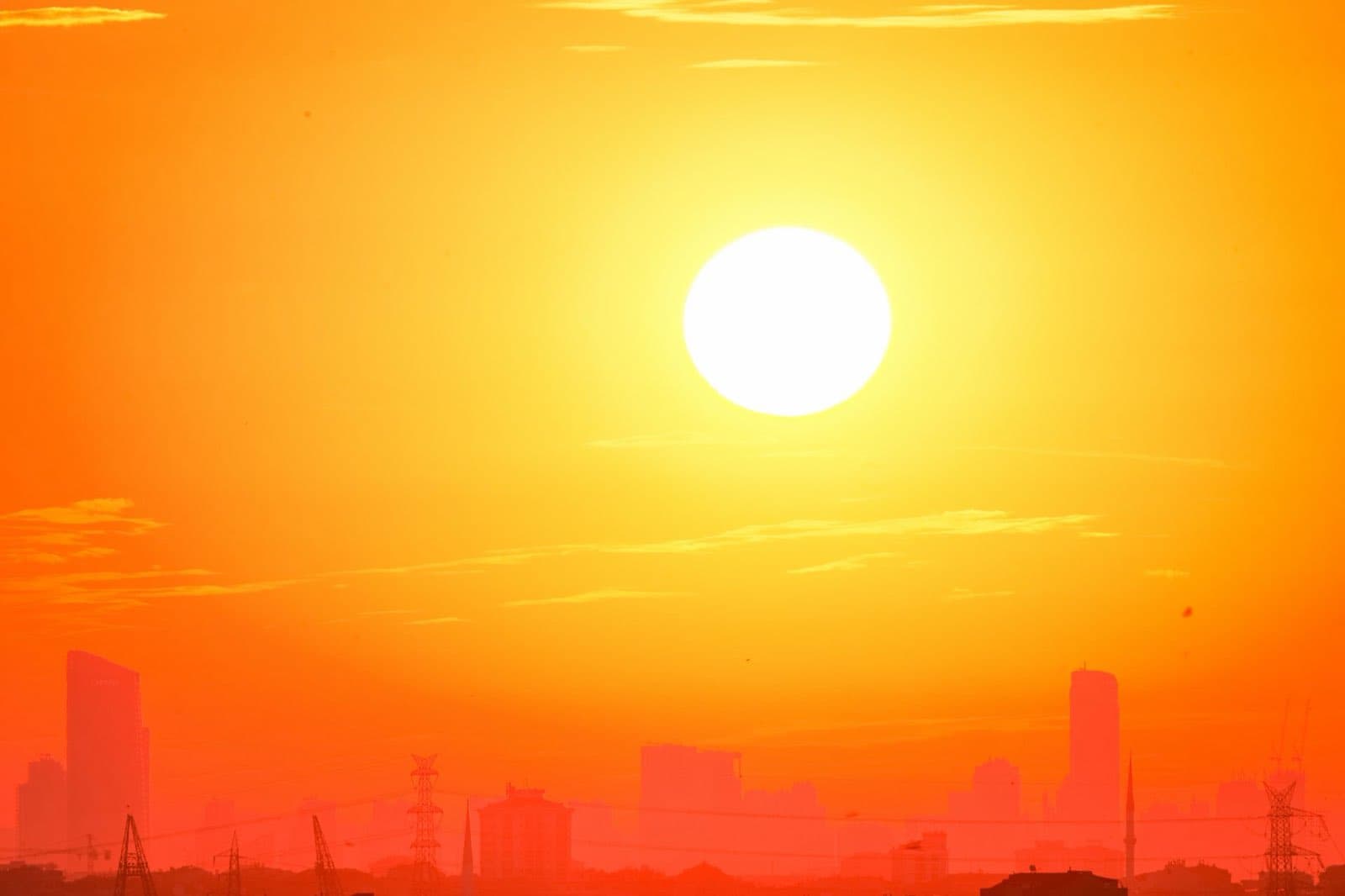
Quick answer
Heat is a compound event: the wave itself, plus the brownouts it causes when every AC runs at once. Plan for both. One genuinely cool room, double the usual water, no-cook meals so the stove stays off, and a battery fan per person for the hours the grid gives out. Then the part people skip: know which neighbor, parent, or friend is over 65 and alone, and check on them daily.
Supply numbers are set for 4 people. Change your household size below and every quantity updates.
#1
Weather killer in the US
2x
Water intake on heat days
65+
The age group most at risk, alone
1 room
Cooled well beats a whole house cooled badly
How a heat wave actually unfolds
2 days out
Excessive heat watch. Freeze water bottles, test the fans, plan no-cook menus, and text the people on your check list so the routine starts before the heat does.
Day 1 to 2
The body copes. Errands move to morning, the cool room does its job, and the water intake doubles without anyone feeling heroic about it.
Day 3+
Cumulative strain: nights stay hot, bodies stop recovering, and the grid wobbles under peak AC load. This is when ERs fill and brownouts start.
The brownout
Rolling outages hit in the late afternoon peak. The battery fans, frozen bottles, and shaded room carry you through the hours the AC cannot.
Your household's number
What do those 3 days take for your house?
The figures above are sized for a typical household. Set yours and you'll get the calories, gallons of water, and what they cost for your people. About a minute, no signup.
Food and water calculator
How much food and water does your household need?
Adults
Children
For how long
You'd need
21,000calories
plus 12 gallons of water, around $40 to buy.
For 2 adults, 2 children, 3 days.
That's the target. Provision Planner counts what you already have and shows you what's left to buy.
See how close you arePlay it out
Four hot days, three decisions
A July heat dome, played honestly. The third decision is the one that matters most.
Scene 1 of 3
Monday. The forecast shows 104, 106, 107, 105. The AC is already running hard, and the utility sends a text about conserving power during peak hours.
Prefer to read it straight through?
Scene 1
Monday. The forecast shows 104, 106, 107, 105. The AC is already running hard, and the utility sends a text about conserving power during peak hours.
If you the ac has never failed. carry on: Reasonable, and probably fine. But heat domes are exactly when twenty-year-old compressors and overloaded grids pick their moment, and repair companies book out two weeks the first morning. No backup plan means betting the week on one machine.
If you prep the backup: freeze bottles, stage fans, pick the cool room: Twenty minutes: a dozen bottles in the freezer, the north-facing bedroom picked as the fallback, fans checked. If nothing breaks you lose nothing. If something does, the plan is already built.
Field note: A frozen water bottle in front of a battery fan is a two-dollar air conditioner. A dozen of them, rotated through a cooler, keep one small room livable through an afternoon outage.
Scene 2
Wednesday, 4pm, day three. The utility starts rolling outages; your block goes dark for two hours in the hottest slice of the day. The house starts warming immediately.
If you ride it out on the couch. it's only two hours: The house climbs to 88 by hour two, everyone is cranky, and the dog is panting. Two hours of that is misery but manageable. The mistake is treating tomorrow's outage the same way, because day four is hotter.
If you everyone into the cool room with the fans and frozen bottles: One shaded room, two fans, frozen bottles rotating out of the cooler: the room holds in the upper 70s while the rest of the house bakes. The outage passes as a board-game hour instead of a slog.
Field note: Cooling one room well beats cooling a whole house badly. Close it off, shade the window, and put the bodies, the fans, and the ice in the same place.
Scene 3
Thursday morning. Your neighbor Ruth is 78, widowed, proud, and her house has been quiet. Her AC is a window unit older than your car. You have not actually seen her since Monday.
If you she would call if she needed something: The hard truth of heat deaths: most happen alone and indoors, to older people who did not want to bother anyone. She probably is fine. The knock costs ninety seconds; the alternative costs more than this story is willing to write.
If you knock now, and put her on the daily list: She is okay but her unit is limping and she has been drinking one glass of water a day so she does not have to take the stairs. An afternoon in your cool room, a case of water on her counter, and a daily check turn the week safe.
Field note: Most US heat deaths are people over 65, alone, indoors. The daily check-in knock is the single highest-value action in this entire scenario, and it costs nothing.
The heat wave checklist
People in your household
One page per scenario: quantities resize in place, and the link you share always shows this plan.
Your head start
0 of 3 days covered
0 of 10 essentials on hand
Tick what you already own.Save this as your real plan →Supplies buy you days. Gear keeps those days livable. Most families discover they start around day 3.
| Item | For 4 people | Why it matters | Covers | |
|---|---|---|---|---|
| Water · 12 gallons total | ||||
| Bottled water, 24-pack cases | 3 cases (about 7 gal) | Sealed, portable, splits between rooms and the car. | All days | |
| 5-gallon water jugs | 1 jug | The cheapest gallons you can store. Fill spares before the event, not during. | Backup | |
| Water purification tablets | 1 pack | Turns suspect tap or tub water into drinking water after day 3. | Backup | |
| Keeping cool when the grid strains | ||||
| Battery or USB fans | 4 fans | The AC needs the grid. These need a charge, and they run all afternoon on one. | Brownout | |
| Refreezable bottles and packs | A dozen, rotating | Frozen bottle plus fan equals a personal AC. They also keep the cooler cold. | Brownout | |
| Blackout curtain or foil for the cool room window | 1 window's worth | Shading one window drops the room several degrees before anything is switched on. | Cool room | |
| Electrolyte packets | 12 packets | Water alone stops being enough around day three of sweating. | Day 3+ | |
| Digital thermometer | 1 | Heat exhaustion versus heat stroke is a number, not a guess. Above 103, it is an emergency. | Health | |
| Food, no cooking required | ||||
| Canned protein: tuna, chicken, beans | 8 cans | Eats straight from the can when the stove is out. | No cooking | |
| Canned vegetables and fruit | 9 cans | Fluids and vitamins while the fridge is dark. | No cooking | |
| Peanut butter | 1 large jar | 2,650 calories per jar, no prep, kids will actually eat it. | No cooking | |
| Crackers, tortillas, granola bars | 2 boxes plus a dozen bars | The bread aisle empties first. These keep for months instead of days. | No cooking | |
| Oats and shelf-stable milk | 3 cartons plus a canister of oats | Breakfast without power, and the milk needs no fridge until opened. | No cooking | |
| Power, light, and news | ||||
| Flashlights or headlamps | 5 flashlights | One per person plus a spare. Candles start fires in dark houses. | All week | |
| Batteries in every size you use | 2 packs per size | The thing that runs out on day 2 if you guess. | All week | |
| Phone battery banks, fully charged | 2 banks | Your phone is your flashlight, radio, and lifeline. Top the banks up the moment trouble is forecast. | All week | |
| NOAA weather radio, battery or crank | 1 | When cell towers and wifi fail, official updates still reach you here. | All week | |
Water doubles on heat days, so the targets below already assume it. Everything else is about keeping one room cool when the grid strains. Print this page to take it shopping.
In the app
The quiet disaster deserves a real plan too
Provision Planner has a built-in Extreme Heat scenario. It tracks the water target that doubles on hot days, the fan and ice inventory for brownout hours, and it carries National Weather Service heat warnings so the alert and the plan live in one place.
Run the heat scenarioExtreme Heat scenario
Water at heat rates
4 days
No-cook meals
6 days
Brownout kit
1 fan short
Heat alerts for your area
Live
Computed from your real inventory. Updates itself as things expire.
Frequently asked questions
How much water do you need during a heat wave?
Plan on two gallons per person per day: double the standard emergency rate. Sweating losses climb faster than thirst reports them, and by day three plain water needs electrolyte help. The checklist above already uses heat-wave rates.
What is a cool room and why one room?
It is the most shadeable, most closable room in the house, ideally north-facing. Cooling one room to genuinely comfortable takes a fraction of the energy of cooling the whole house, keeps working during brownouts with fans and ice, and gives bodies a full recovery zone at night.
Who is most at risk in extreme heat?
People over 65 living alone, people on certain medications, outdoor workers, and young children, roughly in that order. Most US heat deaths are older adults found indoors. A daily check-in on the older people around you outperforms any gadget on this page.
Why do heat waves cause power outages?
Peak AC load pushes the grid to its limits in the late afternoon, exactly when generation and transmission equipment run hottest and least efficiently. Utilities shed load with rolling outages to prevent bigger failures. Plan for the outage as part of the heat wave, not as a separate surprise.
Explore more scenarios
Every scenario gets the same treatment: the event, the supplies, the timeline, and your number.
 Scenario 06Power Outage
 Scenario 04Wildfire
 Scenario 10Water Outage
 Scenario 07Grid Failure
 Scenario 01Hurricane34 scenarios, one libraryBrowse them all →
Go deeper: 3-Day Supply Plan for 4 People · Food Storage Calculator
Heat health guidance follows the CDC and the National Weather Service; supply targets follow FEMA planning guidance adjusted to heat-wave water rates. This is general planning guidance: adjust for medications, age, and health conditions in your household. Photography: NASA image library and Pexels, used under their respective licenses.