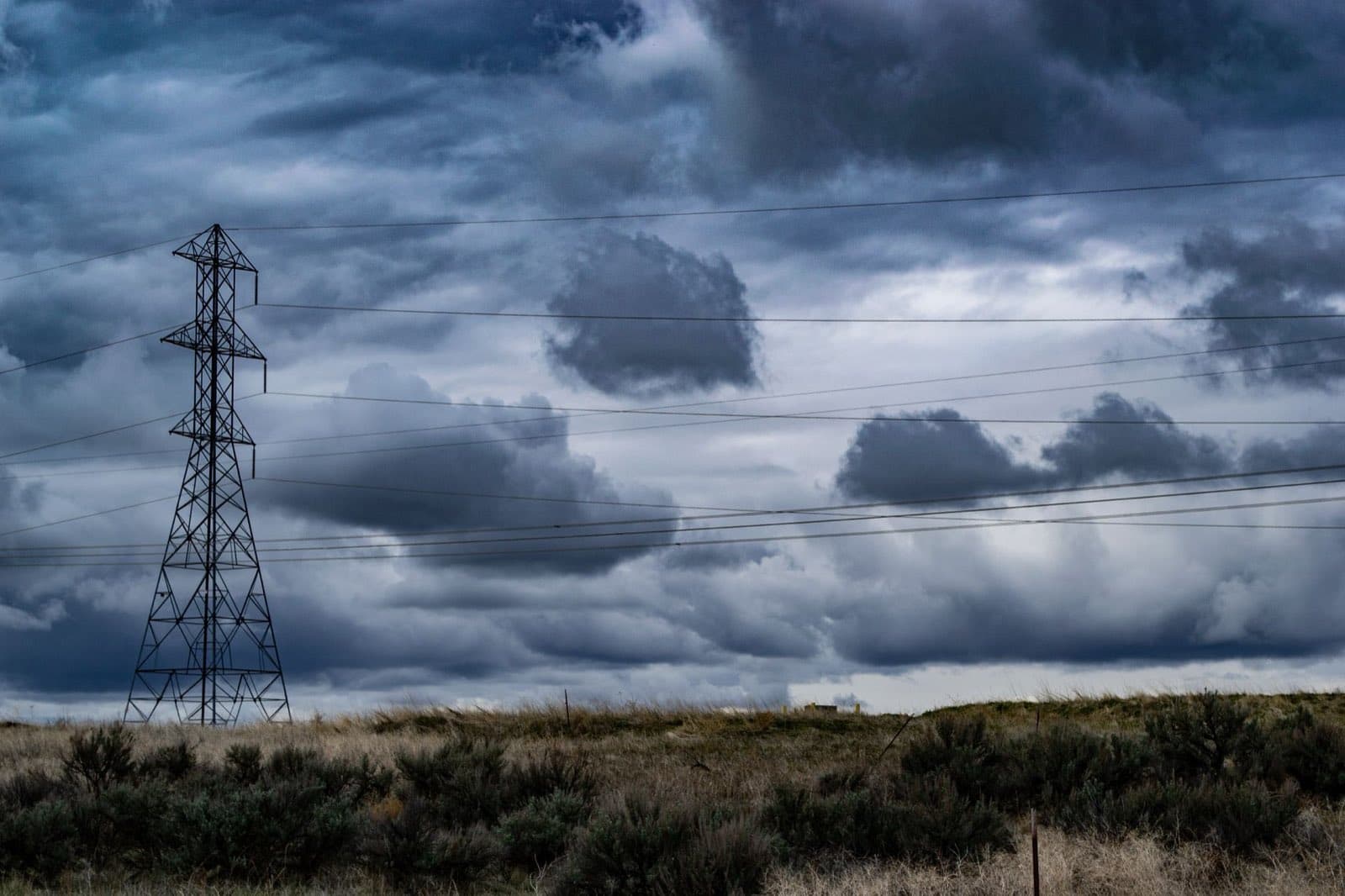
Quick answer
A grid failure is a power outage that outlives your fridge strategy. Plan two weeks: water stored and purifiable because city pressure can fail with the pumps, food that needs no cooking, warmth that needs no furnace, cash because card networks ride the same grid, and a radio because cell towers have batteries measured in hours. It is the same kit as a short outage, deepened.
Supply numbers are set for 4 people. Change your household size below and every quantity updates.
2 weeks
Supply target
4.5M
Texas homes dark in Uri, 2021
Hours
Cell tower battery reserves
Cash
Card networks fail with the grid
How a grid failure actually unfolds
Day 1
Feels like a normal outage. The tell is scale: the whole region is dark, restoration estimates vanish, and officials start using the word conserve.
Days 2 to 3
Dominoes: water pressure drops as pumps drain backup power, cell coverage gets spotty, gas stations with dead pumps close, and stores go cash-only or shut.
Days 4 to 10
The household runs on stored water, shelf food, and battery discipline. One room becomes the warm room or cool room depending on season.
Restoration
Power returns in waves, then water gets boil-notices as pressure rebuilds. The kit refills before the memory fades, because the next one starts the same way.
Your household's number
What do those 14 days take for your house?
The figures above are sized for a typical household. Set yours and you'll get the calories, gallons of water, and what they cost for your people. About a minute, no signup.
Food and water calculator
How much food and water does your household need?
Adults
Children
For how long
You'd need
98,000calories
plus 56 gallons of water, around $185 to buy.
For 2 adults, 2 children, 2 weeks.
That's the target. Provision Planner counts what you already have and shows you what's left to buy.
See how close you arePlay it out
Two dark weeks, three decisions
A February grid failure in a cold snap, played honestly.
Scene 1 of 3
Day 1, evening. Rolling outages became a hard outage this morning. The house is at 61 degrees and dropping a degree an hour. The whole neighborhood is dark, and restoration is officially unknown.
Prefer to read it straight through?
Scene 1
Day 1, evening. Rolling outages became a hard outage this morning. The house is at 61 degrees and dropping a degree an hour. The whole neighborhood is dark, and restoration is officially unknown.
If you space out around the house, pile on blankets everywhere: Livable tonight at 58, harder tomorrow at 48. Heating six rooms with body heat and blankets is a losing math problem; the house is simply too much volume. Everyone is cold everywhere instead of warm somewhere.
If you collapse the house: one room, everyone, sealed and layered: The smallest bedroom becomes the warm room: door closed, towel at the gap, window blanketed, four bodies and the dog. It holds in the mid 60s while the house drops to the 40s. This is how households rode out Uri comfortably.
Field note: One sealed room with the household's body heat holds 15 to 20 degrees above the rest of the house. Shrink the problem to a size your resources can win.
Scene 2
Day 3. Water pressure has gone from strong to sputtering: the city's pumps are on backup power that is running down. Your stored water is fine, but the taps' days are numbered.
If you the city always figures water out. use the taps normally: Then the taps drop to a trickle on day four, and the stored water becomes everything, three days earlier than planned. It still works out, but the margin you paid for is gone, and flushing toilets just got complicated.
If you fill everything now: tubs, pots, jugs, while pressure lasts: Ninety minutes of filling while the pressure holds: the bathtub becomes 60 gallons of flush-and-wash water, and every pot holds drinking backup. When the pressure fails on day four, your household barely notices.
Field note: City water pressure is grid-dependent: pumps run on backup power with finite fuel. Falling pressure is the warning to bank water immediately, in every container that holds it.
Scene 3
Day 6. A store two miles away reopens, cash only, limit ten items. You have $40 in bills from the kit. The line is long but moving, and the shelves are half-stocked with the basics.
If you spend it all topping up comfort foods: Chips and cookies improve morale, no judgment. But the kit's cash was doing a specific job: fuel, medicine, or the one thing you cannot shelf-stock. Spending the reserve on wants during week one is how week two gets tight.
If you buy only what the shelf cannot cover, keep half the cash: Fresh fruit for morale, batteries because they were there, and $20 stays in the envelope. The kit's job is covering what stores cannot; the cash's job is covering what the kit cannot. Both are still on duty.
Field note: In extended outages, cash becomes the only payment layer that works, and it is unrentable once spent. Treat kit cash like a supply item with a job, not found money.
The grid failure checklist
People in your household
One page per scenario: quantities resize in place, and the link you share always shows this plan.
Your head start
0 of 14 days covered
0 of 15 essentials on hand
Tick what you already own.Save this as your real plan →Supplies buy you days. Gear keeps those days livable. Most families discover they start around day 3.
| Item | For 4 people | Why it matters | Covers | |
|---|---|---|---|---|
| Water · 56 gallons total | ||||
| Bottled water, 24-pack cases | 11 cases (about 34 gal) | Sealed, portable, splits between rooms and the car. | Days 1 to 9 | |
| 5-gallon water jugs | 5 jugs | The cheapest gallons you can store. Fill spares before the event, not during. | Days 10 to 14 | |
| Water purification tablets | 1 pack | Turns suspect tap or tub water into drinking water after day 14. | Backup | |
| Food, no cooking required | ||||
| Canned protein: tuna, chicken, beans | 36 cans | Eats straight from the can when the stove is out. | No cooking | |
| Canned vegetables and fruit | 40 cans | Fluids and vitamins while the fridge is dark. | No cooking | |
| Peanut butter | 4 large jars | 2,650 calories per jar, no prep, kids will actually eat it. | No cooking | |
| Crackers, tortillas, granola bars | 8 boxes plus a dozen bars | The bread aisle empties first. These keep for months instead of days. | No cooking | |
| Oats and shelf-stable milk | 12 cartons plus a canister of oats | Breakfast without power, and the milk needs no fridge until opened. | No cooking | |
| Power, light, and news | ||||
| Flashlights or headlamps | 5 flashlights | One per person plus a spare. Candles start fires in dark houses. | All week | |
| Batteries in every size you use | 2 packs per size | The thing that runs out on day 2 if you guess. | All week | |
| Phone battery banks, fully charged | 2 banks | Your phone is your flashlight, radio, and lifeline. Top the banks up the moment trouble is forecast. | All week | |
| NOAA weather radio, battery or crank | 1 | When cell towers and wifi fail, official updates still reach you here. | All week | |
| Warmth without the furnace | ||||
| Sleeping bags rated to freezing | 4 bags | The warm room's floor is the backup furnace. | Winter | |
| Wool blankets and layers | 4 sets | Warmth without any flame or fuel risk indoors. | Winter | |
| Battery CO alarm | 1 per sleeping floor | Long outages are when improvised heating kills. This alarm is the backstop. | Safety | |
| When systems fail | ||||
| Cash in small bills | Two weeks of essentials worth | Card networks, ATMs, and payment apps all ride the grid you just lost. | Critical | |
| Printed contact card | 4 cards | Phone numbers live in a device with a battery. Paper does not run out. | Backup | |
| Full gas tank habit | Keep above half | Station pumps are electric. The half-tank rule means you always hold escape range. | Habit | |
| Health and documents | ||||
| First aid kit | 1 | Minor injuries spike during cleanup, exactly when help is hardest to reach. | All week | |
| Prescription medications | 14-day supply each | Pharmacies reopen slowly. Ask your pharmacist about an emergency refill before you need it. | 2 weeks | |
| Documents in a waterproof bag | IDs, insurance, cash in small bills | ATMs and card readers die with the power. | Grab and go | |
| Manual can opener | 1 | Most of the calories above are locked inside cans without it. | Critical | |
This is the power outage kit at two-week depth, plus the layers people miss: water purification for when pressure fails, warmth without a furnace, and cash. Print this page to take it shopping.
In the app
Two weeks of depth needs an inventory, not a guess
Provision Planner has a built-in Grid Failure scenario. It tracks water, food, warmth, and cash-layer items against the two-week target, works fully offline, and shows exactly which day your coverage ends as supplies get used.
Run the grid failure scenarioGrid Failure scenario
Water incl. purification
15 days
Food
12 days
Warm room kit
Ready
Offline access
On
Computed from your real inventory. Updates itself as things expire.
Frequently asked questions
How is this different from a normal power outage?
Duration and dominoes. Past about 72 hours, the systems that ride the grid start failing too: water pressure, cell coverage, fuel pumps, and payments. A grid failure plan is a power outage plan that also covers water, warmth, communication, and cash.
Has this actually happened in the US?
Yes, repeatedly at regional scale: the 2003 Northeast blackout hit 50 million people, and winter storm Uri in 2021 left millions of Texas homes dark for days in freezing weather, with water systems failing behind the power. Two weeks of household depth is the planning answer.
Why does water fail when power fails?
Municipal water is pumped, and pumps are electric. Systems carry backup generation with limited fuel, so pressure holds for a while and then sags. Falling pressure is your signal to fill tubs and containers immediately, and boil-water notices usually follow restoration.
How much cash should I keep for this?
Enough small bills to buy two weeks of essentials for your household: think groceries, fuel, and a pharmacy run. Keep it in the kit, not the wallet, so it survives normal life and is there when card networks are not.
Explore more scenarios
Every scenario gets the same treatment: the event, the supplies, the timeline, and your number.
 Scenario 06Power Outage
 Scenario 08EMP Attack
 Scenario 09Solar Storm
 Scenario 10Water Outage
 Scenario 13Food Shortage34 scenarios, one libraryBrowse them all →
Go deeper: Battery runtime calculator · Live power outage map · Surviving a Long Power Outage · 2-Week Supply Plan for 4 People · Food Storage Calculator
Grid dependency chains follow DOE and FEMA infrastructure guidance; the two-week target mirrors extended-outage lessons from Uri and the 2003 blackout. This is general planning guidance: adjust for climate, medical needs, and your household. Photography: NASA image library and Pexels, used under their respective licenses.