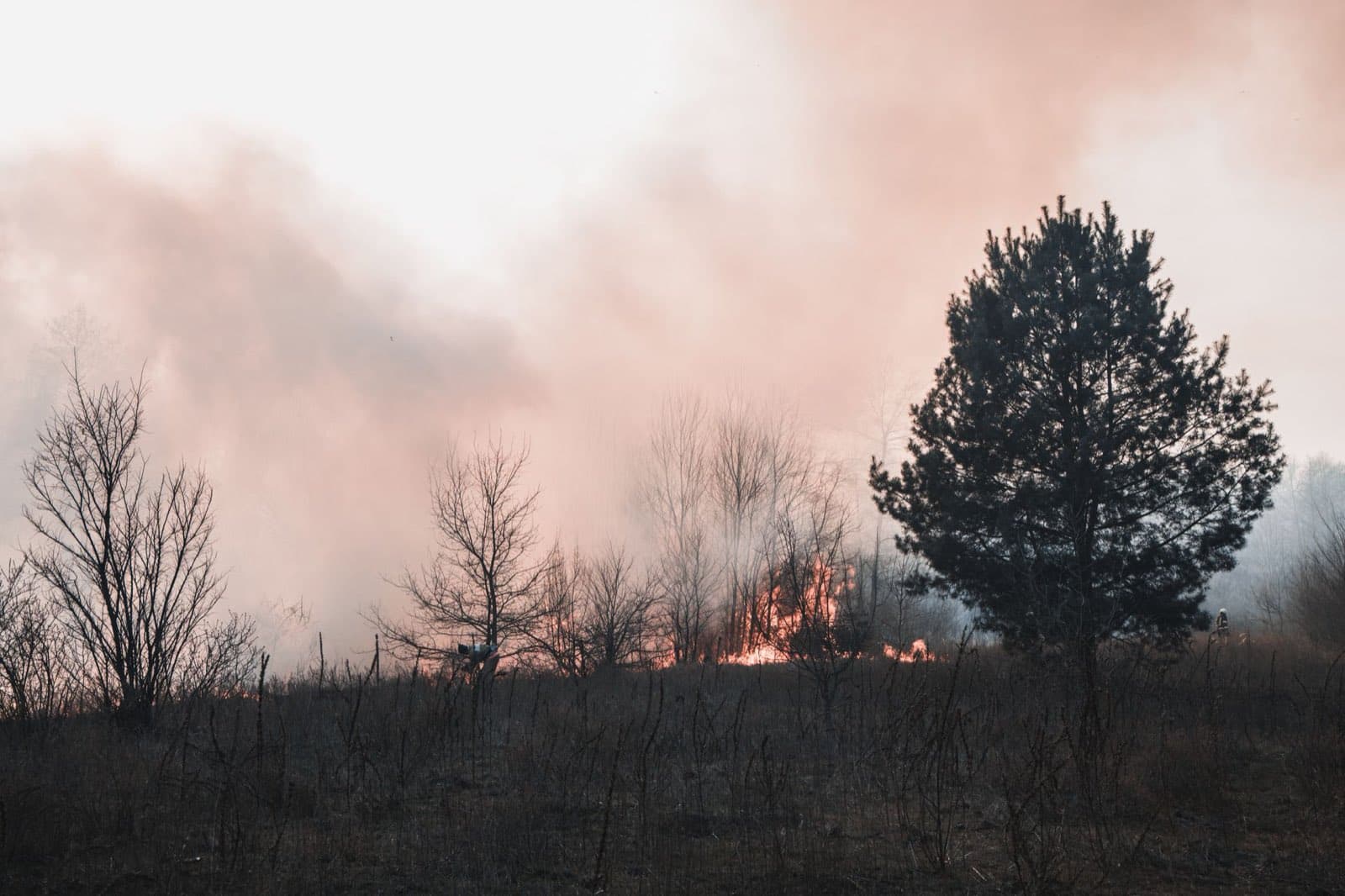
Quick answer
Two plans, one page. If you live near the urban-wildland edge: a go-bag per person and a car that can be loaded in 5 minutes, because fire evacuations come fast and sometimes at 2am. For everyone within smoke range, which is most of the West and increasingly the East: N95s, a sealed clean room, and 3 days of supplies so nobody shops in hazardous air.
Supply numbers are set for 4 people. Change your household size below and every quantity updates.
5 min
Load-and-leave target
1 bag
Go-bag per person, packed now
100+ miles
How far unhealthy smoke travels
N95
The only mask that filters smoke
How a fire week actually unfolds
Red flag day
Hot, dry, windy. If you are near the edge, this is load-the-car-loosely day: go-bags by the door, tank above half, phone alerts on loud.
Evacuation warning
Warning means get ready, order means go. The households that treat warning as go leave on clear roads. The ones that wait leave in the smoke column.
Smoke days
Even 50 miles out, air quality can go hazardous for days or weeks. One sealed room with filtered air beats masking around the clock.
After
Returns are staged and slow: utilities check lines, crews clear hazards. The go-bag that left with you is what you live out of until the all-clear.
Your household's number
What do those 3 days take for your house?
The figures above are sized for a typical household. Set yours and you'll get the calories, gallons of water, and what they cost for your people. About a minute, no signup.
Food and water calculator
How much food and water does your household need?
Adults
Children
For how long
You'd need
21,000calories
plus 12 gallons of water, around $40 to buy.
For 2 adults, 2 children, 3 days.
That's the target. Provision Planner counts what you already have and shows you what's left to buy.
See how close you arePlay it out
One red flag weekend, three decisions
A fire fifteen miles out, played honestly from the edge of the evacuation map.
Scene 1 of 3
Friday evening. A fire started fifteen miles northeast; containment is low and the wind forecast is bad. Your neighborhood is not in any zone yet. The news says officials are monitoring.
Prefer to read it straight through?
Scene 1
Friday evening. A fire started fifteen miles northeast; containment is low and the wind forecast is bad. Your neighborhood is not in any zone yet. The news says officials are monitoring.
If you fifteen miles is far. normal weekend: Often true, and this time the wind shift comes Sunday at 4am. You'll do the go-bag thinking at 4:10am, by phone flashlight, with the smell of smoke in the hallway. Everything takes four times longer at that hour.
If you pack go-bags tonight and stage the car facing out: Forty minutes on Friday: documents, meds, chargers, three days of clothes, the photo drive. Saturday is normal. When the warning comes Sunday, you load in five minutes and beat the whole street to clear roads.
Field note: Fire evacuations concentrate at night, when humidity drops and winds shift. The go-bag packed on a calm Friday is the difference between a five-minute exit and a forty-minute one.
Scene 2
Sunday, 4:20am. Evacuation WARNING for your zone: be ready, not ordered yet. Half the street is loading cars. The other half is watching from porches, coffee in hand, saying it never actually reaches here.
If you porch and coffee. wait for the order: Sometimes the porch crowd is right. But warning-to-order gaps have been as short as minutes in wind-driven fires, and the road out has exactly two lanes. Leaving at the order means leaving with everyone at once.
If you treat warning as go. leave now, calmly: You drive out on open roads, check into your cousin's guest room, and watch the situation from a couch instead of a car line. If the order never comes, you had a weekend visit. If it does, you were never in the queue.
Field note: CAL FIRE's own guidance: if you feel unsafe, do not wait for an order. Early departure is the single choice that removes the most risk from a wildfire.
Scene 3
The fire never crosses the ridge. But for nine days the air outside is the color of tea, AQI over 300, and your six-year-old's soccer practice keeps almost happening.
If you windows shut, tough it out. it's just haze: Smoke sneaks through every gap a house has, and hazardous days add up exactly like cigarettes. Everyone's throat is scratchy by Thursday. It passes, but it did not have to be nine bad days.
If you seal one bedroom, run a hepa filter, n95s for any errand: One room stays genuinely clean; sleep happens there. The purifier hums, the N95s live by the door, and the week is an inconvenience instead of a health event. This is the plan most non-edge households actually need.
Field note: The EPA's clean-room protocol is one room, gaps sealed, HEPA filtration running. It protects lungs better than masking all day, and a box fan with a furnace filter approximates it in a pinch.
The wildfire checklist
People in your household
One page per scenario: quantities resize in place, and the link you share always shows this plan.
Your head start
0 of 3 days covered
0 of 11 essentials on hand
Tick what you already own.Save this as your real plan →Supplies buy you days. Gear keeps those days livable. Most families discover they start around day 3.
| Item | For 4 people | Why it matters | Covers | |
|---|---|---|---|---|
| Go-bags, packed before the season | ||||
| Go-bag per person | 4 bags | Three days of clothes, meds, chargers, and comfort item. Lives by the door all season. | Critical | |
| Document folder or drive | 1, waterproof | IDs, insurance, deed, and irreplaceable photos. The thing people run back for. | Critical | |
| Cash in small bills | One tank of gas worth | Evacuation routes are where card readers go down. | Go-bag | |
| Smoke days | ||||
| N95 or KN95 masks | 16 masks | Cloth and surgical masks do not filter smoke particles. N95s do. | Smoke | |
| HEPA air purifier | 1, sized to a bedroom | Anchors the clean room. A box fan with a furnace filter is the budget version. | Smoke | |
| Painter's tape and towels | 1 roll | Seals the clean room's door gaps and window edges in ten minutes. | Smoke | |
| Water · 12 gallons total | ||||
| Bottled water, 24-pack cases | 3 cases (about 7 gal) | Sealed, portable, splits between rooms and the car. | All days | |
| 5-gallon water jugs | 1 jug | The cheapest gallons you can store. Fill spares before the event, not during. | Backup | |
| Water purification tablets | 1 pack | Turns suspect tap or tub water into drinking water after day 3. | Backup | |
| Food, no cooking required | ||||
| Canned protein: tuna, chicken, beans | 8 cans | Eats straight from the can when the stove is out. | No cooking | |
| Canned vegetables and fruit | 9 cans | Fluids and vitamins while the fridge is dark. | No cooking | |
| Peanut butter | 1 large jar | 2,650 calories per jar, no prep, kids will actually eat it. | No cooking | |
| Crackers, tortillas, granola bars | 2 boxes plus a dozen bars | The bread aisle empties first. These keep for months instead of days. | No cooking | |
| Oats and shelf-stable milk | 3 cartons plus a canister of oats | Breakfast without power, and the milk needs no fridge until opened. | No cooking | |
| Health and documents | ||||
| First aid kit | 1 | Minor injuries spike during cleanup, exactly when help is hardest to reach. | All week | |
| Prescription medications | 14-day supply each | Pharmacies reopen slowly. Ask your pharmacist about an emergency refill before you need it. | 2 weeks | |
| Documents in a waterproof bag | IDs, insurance, cash in small bills | ATMs and card readers die with the power. | Grab and go | |
| Manual can opener | 1 | Most of the calories above are locked inside cans without it. | Critical | |
The go-bag section is per person and packed in advance; the rest keeps the household running through smoke days. Print this page to take it shopping.
In the app
The go-bag is packed. Now keep it current.
Provision Planner has a built-in Wildfire scenario. Track what is in each go-bag, get flagged when the meds inside expire, and see how many smoke days your shelf covers. Live National Weather Service alerts, including red flag warnings, arrive in the same app.
Run the wildfire scenarioWildfire scenario
Go-bags
4 packed
Masks
12 N95s
Meds in bags
Expire in 20 days
Red flag alerts
Live
Computed from your real inventory. Updates itself as things expire.
Frequently asked questions
What goes in a wildfire go-bag?
Per person: three days of clothes, prescription meds, chargers, N95s, water bottle, and one comfort item. Per family: the document folder, cash in small bills, and the photo drive. Pack it before fire season and let it live by the door.
When should I leave?
At the evacuation warning, not the order, if you can. Warnings exist because orders sometimes arrive with only minutes of margin. Leaving early costs a tank of gas; leaving late costs sitting in a smoke column on a two-lane road.
Do masks help with wildfire smoke?
Only N95 or KN95 respirators, worn with a real seal. Cloth and surgical masks stop almost none of the fine particles that make smoke dangerous. For long smoke events, a sealed clean room with HEPA filtration protects better than any mask.
I live far from wildfire country. Does any of this apply?
The smoke plan does. Smoke from large fires now routinely turns air hazardous a hundred or more miles away, and in recent years reached the East Coast. N95s and one HEPA purifier cover the most likely wildfire impact for most American households.
Explore more scenarios
Every scenario gets the same treatment: the event, the supplies, the timeline, and your number.
 Scenario 16Evacuation
 Scenario 06Power Outage
 Scenario 05Extreme Heat
 Scenario 15House Fire
 Scenario 01Hurricane34 scenarios, one libraryBrowse them all →
Go deeper: Wildfire Evacuation Checklist · 3-Day Supply Plan for 4 People · Food Storage Calculator
Evacuation guidance follows Ready.gov and CAL FIRE; clean-room and mask guidance follows the EPA. This is general planning guidance: adjust for your distance to the wildland edge and your household's health needs. If officials order an evacuation, leave. Photography: NASA image library and Pexels, used under their respective licenses.