How Much Cash Should You Keep at Home for Emergencies?
October 1, 2026 · 3min read · Reviewed against FEMA & CDC guidance
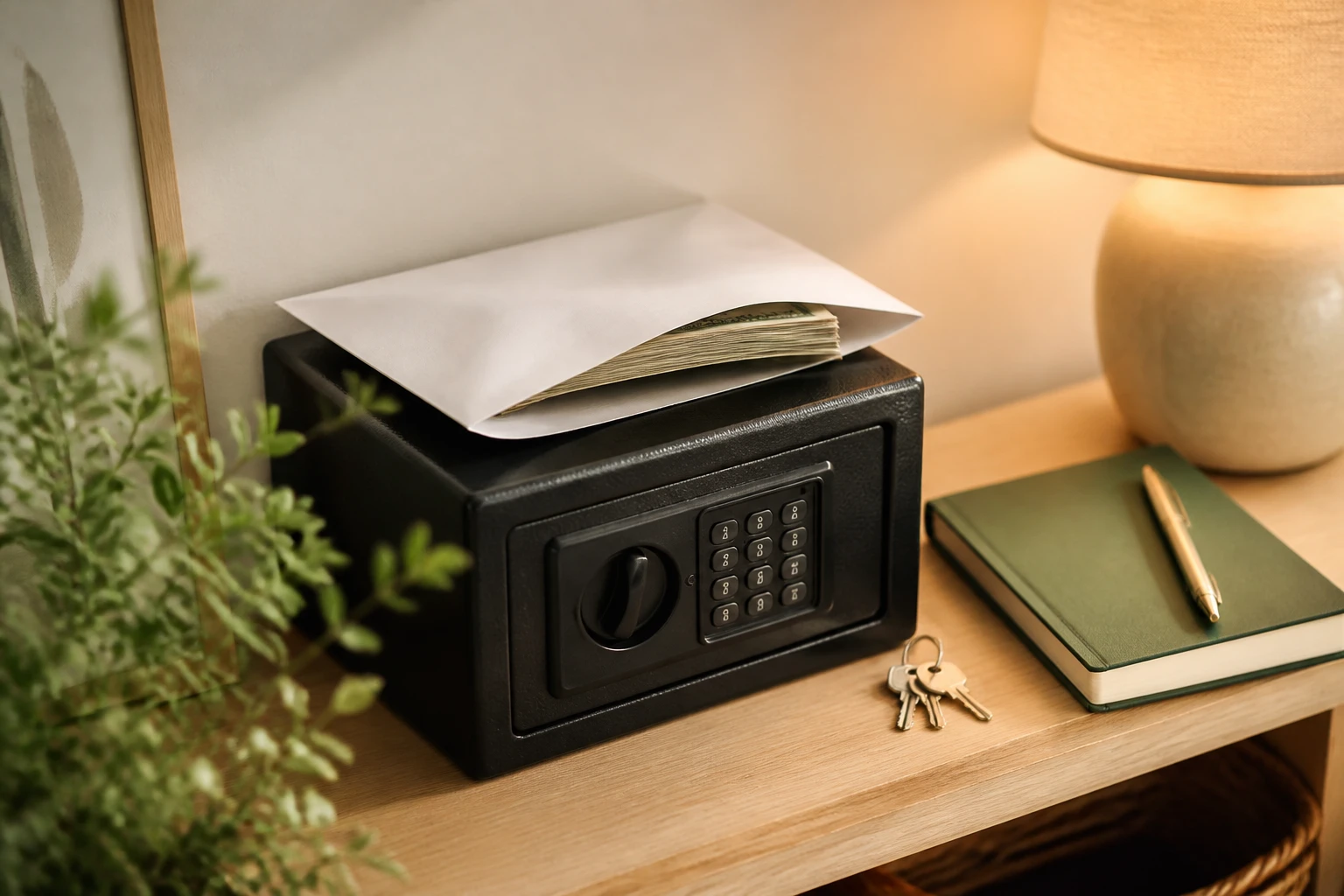
When a storm takes the power out regionally, the card readers, ATMs, and payment apps go with it, and the economy in your zip code becomes cash-only for a few days. FEMA's guidance is simply to have cash on hand in small bills. The number it does not give you is how much.
Start here: $150 to $500 covers what the first few days actually cost. A tank of gas, groceries, a prescription copay, ice, maybe a motel night. Double it toward $1,000 if your plan includes evacuating a family, because evacuation is a cash-burning event: fuel every few hundred miles, food on the road, a room at the end.
What the cash is for, line by line
Thinking in line items beats picking a round number, because it sizes the stash to your household:
| Line | Typical cost | Notes |
|---|---|---|
| Fuel, two fill-ups | $80 to $140 | pumps often cash-only on backup power |
| Three days of bought food | $60 to $120 | stores open, registers offline |
| Medication copays | $20 to $60 | pharmacies prioritize cash when systems are down |
| One motel night | $80 to $150 | the fallback when staying stops making sense |
| Small repairs, ice, batteries | $40 to $80 | the hardware-store run everyone makes |
Add your own lines (pet boarding, tolls, a generator's worth of propane swaps) and the total lands naturally. For most families it lands inside that $150 to $500 band.
Food and water calculator
How much food and water does your household need?
Adults
Children
For how long
You'd need
98,000calories
plus 56 gallons of water, around $185 to buy.
For 2 adults, 2 children, 2 weeks.
That's the target. Provision Planner counts what you already have and shows you what's left to buy.
See how close you areSmall bills, boring hiding place, one rule
The denomination mix matters more than the amount. Mostly twenties, tens, fives, and a sleeve of ones. When registers are down, clerks round to what they can make change for, and a hundred-dollar bill becomes a hundred-dollar purchase.
Keep it somewhere fireproof and unremarkable, not the sock drawer and not a decoy safe bought off a viral video. And know the insurance fine print before deciding the amount: most homeowner's and renter's policies cap stolen-cash coverage near $200. The cap is the quiet argument for keeping the home stash modest. This is the walking-around layer of your emergency fund, not the fund itself; the months-of-expenses money belongs in an account earning interest, exactly where a burglary or house fire can't touch it.
Where does the stash live in your paperwork? Note the amount and location in your emergency binder so a spouse can find it during the event you built it for, and list it in your go-bag checklist if evacuation is in your plans.
Keep it boring: the maintenance rhythm
A cash stash fails two quiet ways. It evaporates in twenties borrowed for pizza, or it sits so long the amount no longer matches your life. Both have the same fix: treat it like a smoke alarm. Check it twice a year on the clock changes, replace what wandered off, and re-run the table above whenever the household changes. A new baby, a new commute, or a move to a bigger house all raise the line items.
Two timing notes from how storms actually play out. The ATM line forms when the forecast firms up, about 48 hours out, so topping up at the first watch beats joining that line. And after the event, spend the stash freely for what it was built for, then rebuild it the first calm week. A stash you are afraid to spend during the actual emergency was never an emergency fund, just a hiding place.
Cash buys what you forgot. Supplies are what you meant to have.
Every line in that table above is a purchase you make because something was not already in the house. The cheaper version of most of them is the shelf: food, water, medicine, batteries, bought at normal prices on a normal week.
Provision Planner shows you which of those purchases your house has already covered, as days of food and water for your household, and which ones are still waiting to cost you storm prices. The cash covers the gap; the app shrinks it.
Frequently asked questions
- How much emergency cash should I keep at home?
- A practical range is $150 to $500 for most households: enough for fuel, food, medicine, and a night's lodging when card networks are down. Families planning for longer disruptions or evacuation often hold $500 to $1,000. Past that, money works harder in the bank.
- What bills are best for emergency cash?
- Small ones. Ones, fives, tens, and twenties. During an outage, a store making change for a hundred is rare, and 'exact amount only' signs appear fast. A stack of twenties and smaller spends everywhere; a few hundreds mostly don't.
- Does homeowner's insurance cover stolen cash?
- Barely. Most homeowner's and renter's policies cap cash coverage around $200 no matter how much was taken. That cap is a good argument for keeping the at-home amount modest and the rest in an account.
You did the reading. Now get your number.
Provision Planner does this article's math for your real household, automatically, and keeps it current as supplies come and go.