Go Bag vs 72-Hour Kit: One Checklist That Covers Both
July 10, 2026 · 4min read · Reviewed against FEMA & CDC guidance
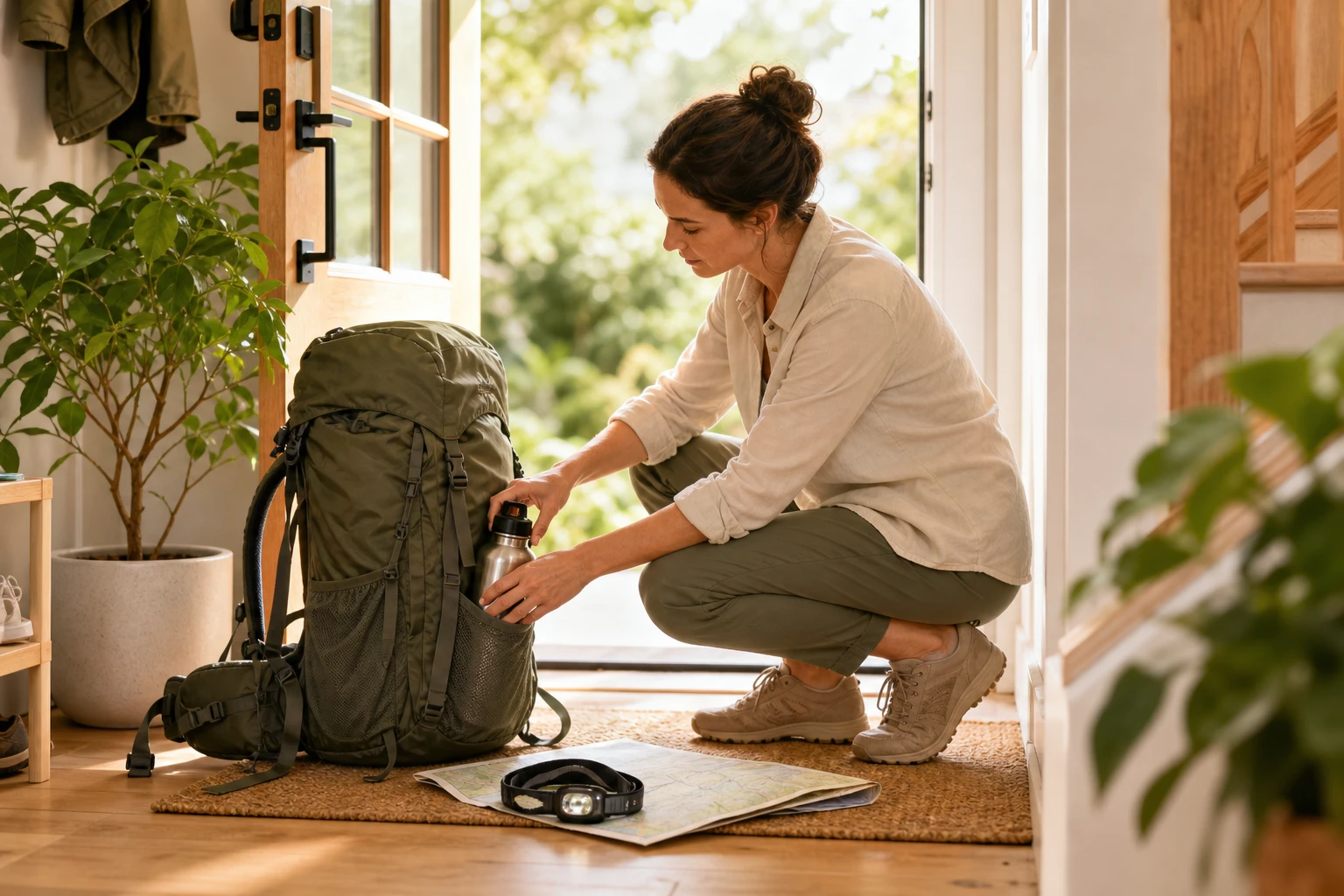
Here is a quick test: if you had to walk out your front door in ten minutes and not come back for three days, what would you grab? Most people start listing things scattered across four rooms and a garage. That scattered list is exactly what a go bag replaces.
The target is one bag per person, packed in advance, that covers 72 hours away from home and weighs no more than 15 to 20 percent of your body weight. For most adults that means a finished bag of 20 to 30 pounds. Everything below fits inside those two numbers.
Is a go bag different from a 72-hour kit?
Mostly no, and the internet makes this more confusing than it needs to be. Both describe the same idea: FEMA recommends every household be able to support itself for at least 72 hours, and a portable kit is how you do that away from home.
The one honest difference is where the kit lives and how it is packed:
- A 72-hour kit can be a bin in the closet. It supports sheltering at home or loading the car. If you are building that version, start with our 72-hour kit guide.
- A go bag assumes you leave on foot or in minutes. It has to be carryable, so weight discipline matters more than completeness.
Build the bag first. A bag can shelter in place; a bin cannot walk to a shelter.
Food and water calculator
How much food and water does your household need?
Adults
Children
For how long
You'd need
98,000calories
plus 56 gallons of water, around $185 to buy.
For 2 adults, 2 children, 2 weeks.
That's the target. Provision Planner counts what you already have and shows you what's left to buy.
See how close you areWhat goes in the bag
The list below is per adult. Numbers in bold are the planning figures worth memorizing.
| Category | What to pack | Weight (approx.) |
|---|---|---|
| Water | 3 liters in bottles + a filter or purification tablets | 7 lbs |
| Food | 2,400 to 3,600 calories of no-cook, dense food (bars, nuts, jerky, peanut butter packets) | 3 lbs |
| Warmth | One full change of clothes, rain shell, emergency blanket, hat | 4 lbs |
| Light and power | Headlamp, spare batteries, phone battery bank and cable | 1.5 lbs |
| First aid | Compact kit plus 3 days of prescription medicines | 1.5 lbs |
| Hygiene | Toothbrush, wipes, hand sanitizer, small towel, spare glasses if you wear them | 1.5 lbs |
| Documents | Copies of IDs, insurance, key contacts in a zip bag, plus $100 to $200 in small bills | 0.5 lbs |
| Tools | Whistle, N95 masks, multi-tool, duct tape wrap, local paper map | 1.5 lbs |
That table lands around 21 pounds with the bag itself, right in the carryable zone. If yours is heavier, cut clothing and tools before you ever cut water, food, or medicine.
Two additions people regret skipping: comfortable broken-in shoes tied to the bag (evacuations happen in whatever you are wearing), and one small comfort item per kid, chosen by the kid.
Where water and food discipline comes from
Water is the heaviest thing you will carry, which is why the bag holds only 3 liters plus a way to make more. (The evacuation checklist tool makes the same trade visible: switch it to leaving on foot and water is the first thing it drops.) A filter weighs 3 ounces and turns almost any freshwater source into drinking water. That trade, carrying less and purifying more, is the single biggest weight saver in the whole kit.
Food follows the same logic: this is not the place for canned goods. A can of chili is comfort food at home and dead weight on your shoulder. Save the cans for your home supply and pack calorie-dense food that needs no cooking, no opener, and no cleanup.
How to keep it from going stale
A go bag is not a build-once project. Food expires, kids outgrow the spare clothes, medications change, and the battery bank drains on the shelf. Twice a year, on a date you already remember (clock changes work well), open the bag, swap expiring food, refresh medicines and documents, and recharge the battery.
If you evacuate by car, the bag rides along with your car emergency kit, and in wildfire or flood country it pairs with a practiced 10-minute evacuation plan. The bag is what you carry; the plan is what makes the ten minutes calm.
The part a checklist cannot do
A checklist gets the bag packed once. The failure mode shows up 18 months later: granola bars from two winters ago, a dead battery bank, and amoxicillin from a prescription that ended last spring. Nobody notices until the night they need it.
That ongoing part is what Provision Planner handles. Add your go bag items once, with their expiration dates, and it quietly tracks what is about to expire and what needs replacing, alongside the rest of your household supplies. Your bag stays a 10-minute exit instead of a box of expired good intentions.
Frequently asked questions
- What's the difference between a go bag and a 72-hour kit?
- They overlap heavily. A 72-hour kit holds three days of survival supplies; a go-bag is the grab-and-run version you can carry on your back and evacuate with fast. One checklist covers both, with the go-bag trimmed for weight.
- What should be in a go bag?
- Water and a filter, no-cook food, a first-aid kit, medications, a flashlight, a radio, a phone charger, cash, copies of documents, a change of clothes, and hygiene items, all sized to carry comfortably, ideally under about 20% of your body weight.
- How heavy should a go bag be?
- Aim for no more than about 20% of your body weight so you can actually carry it a distance. That means prioritizing water and essentials, using lightweight food, and skipping bulky gear you won't realistically need in the first three days.
You did the reading. Now get your number.
Provision Planner does this article's math for your real household, automatically, and keeps it current as supplies come and go.