
Quick answer
Pandemic preparedness is trip-reduction math: every week you can skip the store is a week of exposure you did not buy. The target is 30 days of normal-diet depth, built slowly and rotated always, plus the home care shelf nobody stocks until the bad week: fever reducers, a real thermometer, electrolytes, and the sick-room basics. You already know this works. You watched it work.
Supply numbers are set for 4 people. Change your household size below and every quantity updates.
30 days
Pantry depth target
2 weeks
Standard isolation planning window
Trips
The variable you are minimizing
Rotation
Deep pantry, zero waste
How a pandemic actually unfolds at home
The far-away phase
News from somewhere else, weeks of lead time. This is the whole game: the quiet weeks when adding depth costs nothing and raises zero eyebrows.
Arrival
First local cases, first store runs, first shortages of oddly specific things. Households with depth simply skip this chapter.
The long middle
Life reorganizes around fewer contacts. The pantry's job is stretching the gap between store trips from days to weeks.
The sick weeks
Sooner or later the household nurses someone through it. The care shelf and the isolation plan turn a hard week into a managed one.
Your household's number
What do those 30 days take for your house?
The figures above are sized for a typical household. Set yours and you'll get the calories, gallons of water, and what they cost for your people. About a minute, no signup.
Food and water calculator
How much food and water does your household need?
Adults
Children
For how long
You'd need
210,000calories
plus 120 gallons of water, around $395 to buy.
For 2 adults, 2 children, 1 month.
That's the target. Provision Planner counts what you already have and shows you what's left to buy.
See how close you arePlay it out
Three phases, three decisions
A new respiratory bug, six weeks out. You have seen this movie; play it smarter.
Scene 1 of 3
Week 1. Health agencies are watching an outbreak overseas. Flights still fly, markets shrug, and the story sits below the sports scores. Your pantry is a normal American pantry: nine days deep, optimistically.
Prefer to read it straight through?
Scene 1
Week 1. Health agencies are watching an outbreak overseas. Flights still fly, markets shrug, and the story sits below the sports scores. Your pantry is a normal American pantry: nine days deep, optimistically.
If you it's a world away. watchful waiting: Watching is what most households do, which is exactly why week six's stores are a contact sport. Nothing bad happens to you in this scene; you just spend your cheapest preparation window on watching.
If you add depth quietly: one extra of everything, every trip: The doubling-cart trick: every normal trip, one extra of each staple you already eat. No pallets, no posts, no price spikes, and six weeks later the pantry is 30 days deep at regular prices. Calm depth is invisible and cheap.
Field note: The cheapest pandemic supplies are the ones bought before anyone is worried, one cart at a time. Depth built slowly costs nothing extra and rotates into normal meals if nothing happens.
Scene 2
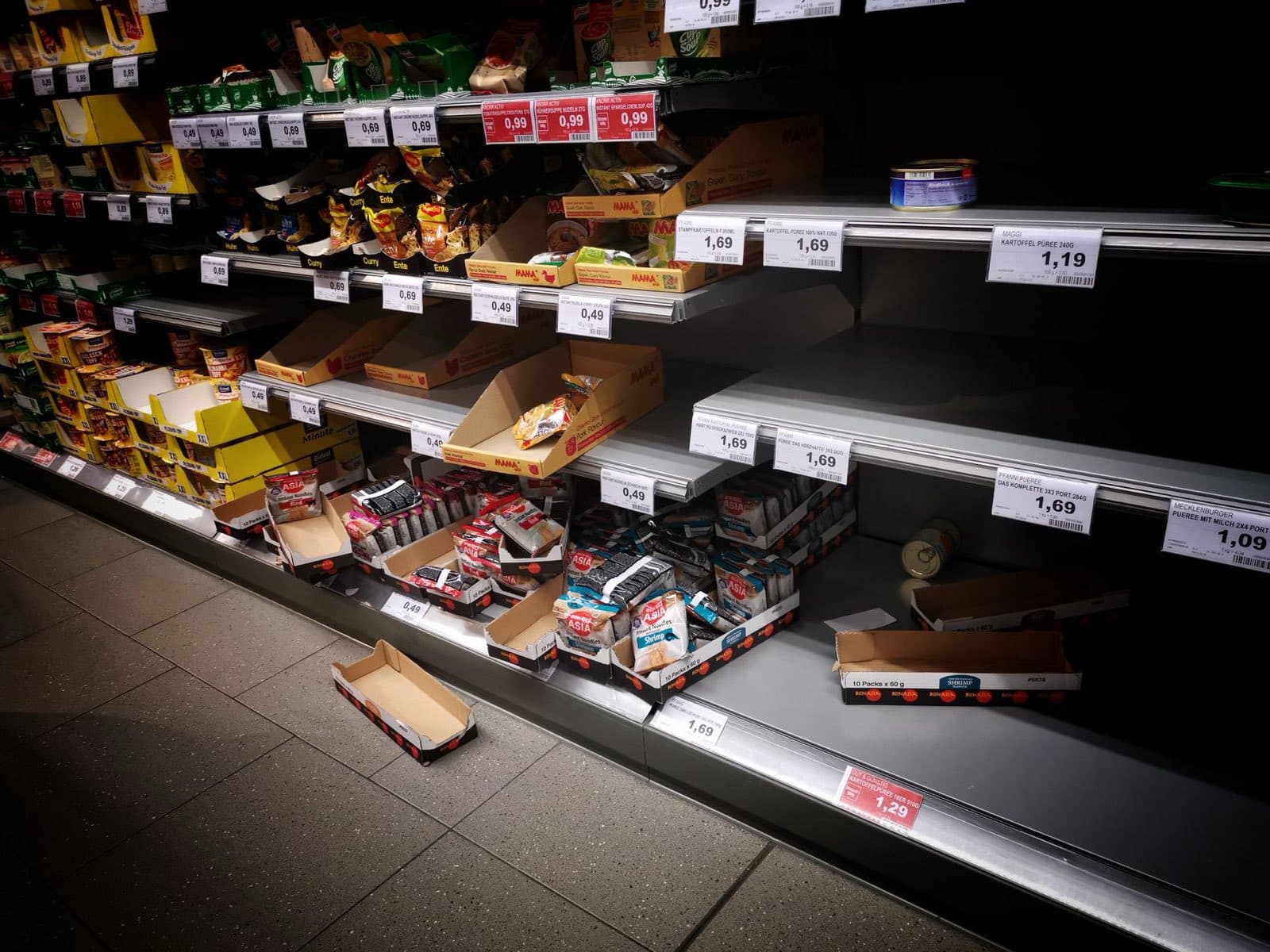
Week 5. First cases in your county. The store this morning has a line at open, empty paper aisles, and a man defending a fortress of 40 chicken-broth cartons. The energy is contagious in both senses.
If you match the energy. grab what's grabbable: You come home with $180 of adrenaline purchases: four broths, strange pasta, and a flat of energy drinks. The pantry gets weirder, not deeper. Panic shopping buys what is left, not what is needed.
If you shop the list, skip the theater, add the care shelf: Your list was written at the kitchen table: fever reducers for adults and kids, thermometer batteries, electrolytes, tissues, the comfort teas. Twenty minutes, no drama. The food depth already exists; today was for the sick-week shelf.
Field note: The item people regret not buying is never food; it is the home care shelf: fever reducers, a working thermometer, electrolytes. Stock the sick week before anyone is sick.
Scene 3
Week 9. It is in the house: one adult, fever and aches, likely a rough seven days. The other adult becomes head nurse, short-order cook, and sole errand runner for a four-person household.
If you improvise: shared bathroom, meals together, hope for the best: The most common outcome follows: the second adult goes down on day five, and the household spends a week with no functioning grown-up. Everyone recovers fine, but that week runs on cereal and cartoons.
If you run the sick-room protocol from the care shelf plan: One bedroom and one bathroom become the sick wing, meals travel one direction on a tray, and the healthy adult sleeps on the sofa bed guarding their own health like the household resource it is. The bug stops at patient one, and the week stays merely bad.
Field note: The second infection is the one that breaks a household's logistics. A sick room, a dedicated bathroom where possible, and one-way meal service measurably cut in-home spread.
The pandemic checklist
People in your household
One page per scenario: quantities resize in place, and the link you share always shows this plan.
Your head start
0 of 30 days covered
0 of 10 essentials on hand
Tick what you already own.Save this as your real plan →Supplies buy you days. Gear keeps those days livable. Most families discover they start around day 3.
| Item | For 4 people | Why it matters | Covers | |
|---|---|---|---|---|
| Water · 28 gallons total | ||||
| Bottled water, 24-pack cases | 6 cases (about 17 gal) | Sealed, portable, splits between rooms and the car. | Days 1 to 5 | |
| 5-gallon water jugs | 3 jugs | The cheapest gallons you can store. Fill spares before the event, not during. | Days 6 to 7 | |
| Water purification tablets | 1 pack | Turns suspect tap or tub water into drinking water after day 7. | Backup | |
| Pantry depth, rotated | ||||
| Canned protein: tuna, chicken, beans | 77 cans | Eats straight from the can when the stove is out. | No cooking | |
| Canned vegetables and fruit | 86 cans | Fluids and vitamins while the fridge is dark. | No cooking | |
| Peanut butter | 9 large jars | 2,650 calories per jar, no prep, kids will actually eat it. | No cooking | |
| Crackers, tortillas, granola bars | 17 boxes plus a dozen bars | The bread aisle empties first. These keep for months instead of days. | No cooking | |
| Oats and shelf-stable milk | 26 cartons plus a canister of oats | Breakfast without power, and the milk needs no fridge until opened. | No cooking | |
| The home care shelf | ||||
| Fever reducers, adult and child doses | 2 bottles each | The item every 2020 household wished it had two of. | Sick week | |
| Digital thermometer with batteries | 1, plus spares | Care decisions are numbers, not foreheads. | Sick week | |
| Electrolyte packets | 16 packets | Fever plus poor appetite dehydrates faster than people expect. | Sick week | |
| N95 or KN95 masks | 20 masks | For the nurse role and the unavoidable errands. | Sick week | |
| Soap, sanitizer, tissues, wipes | A month's depth | The hygiene consumables that vanished first last time. | Daily | |
| Health and documents | ||||
| First aid kit | 1 | Minor injuries spike during cleanup, exactly when help is hardest to reach. | All week | |
| Prescription medications | 14-day supply each | Pharmacies reopen slowly. Ask your pharmacist about an emergency refill before you need it. | 2 weeks | |
| Documents in a waterproof bag | IDs, insurance, cash in small bills | ATMs and card readers die with the power. | Grab and go | |
| Manual can opener | 1 | Most of the calories above are locked inside cans without it. | Critical | |
The food section is a normal diet, deepened and rotated, never a bunker menu. The care shelf is the part to buy this week. Print this page to take it shopping.
In the app
Depth you rotate is depth you never waste
Provision Planner has a built-in Pandemic scenario. It tracks pantry depth in days for your real household, flags what expires so rotation actually happens, and keeps the care shelf list where the whole family can see it.
Run the pandemic scenarioPandemic scenario
Pantry depth
24 days
Care shelf
Stocked
Expiring this month
5 items
Shared with household
Yes
Computed from your real inventory. Updates itself as things expire.
Frequently asked questions
How much food should a family store for a pandemic?
Thirty days of the diet you already eat, built gradually and rotated through normal meals. The point is not siege rations; it is stretching the time between store trips during waves, which is the main exposure lever a household controls.
What did households actually run out of in 2020?
Rarely calories. The real gaps were fever reducers, thermometers, cleaning and paper products, and anything for sick kids. That is why the care shelf section exists, and why it is the part to buy first.
Is stocking up hoarding?
Not if you do it before scarcity, one cart at a time, on goods you rotate and eat. Hoarding is buying forty broths during the panic; preparedness is buying one extra every week during the calm. Same shelves, opposite effect on your neighbors.
How do we handle one sick person in the house?
Give the illness a territory: one bedroom, ideally one bathroom, meals delivered one-way, masks for close care, and the healthy caregiver protecting their own sleep. The goal is stopping at patient one, which is the difference between a bad week and a bad month.
Explore more scenarios
Every scenario gets the same treatment: the event, the supplies, the timeline, and your number.
 Scenario 13Food Shortage
 Scenario 17Shelter in PlaceScenario 20Job Loss
 Scenario 10Water Outage
 Scenario 06Power Outage34 scenarios, one libraryBrowse them all →
Go deeper: 1-Month Supply Plan for 4 People · Food Storage Calculator
Household planning guidance follows the CDC. This page covers supplies and logistics, not medical treatment: for symptoms and care decisions, your clinician outranks any checklist. Photography: NASA image library and Pexels, used under their respective licenses.