Quick answer
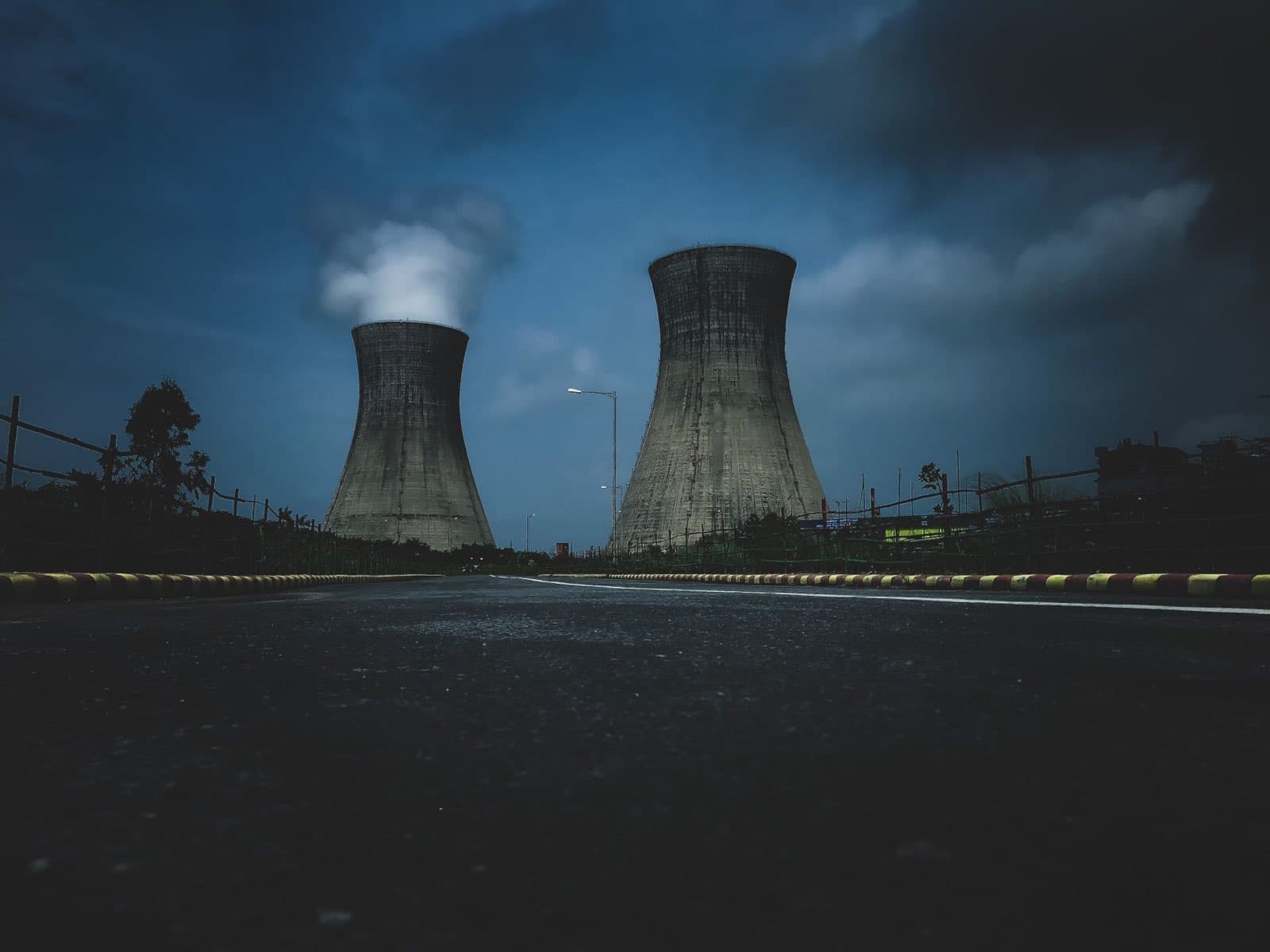
The protective action for a nuclear emergency, whether a plant incident or something worse, is the same three verbs: get inside, stay inside, stay tuned. Fallout risk drops fast, 80% in the first day, which is why the plan is a stocked interior room, two weeks of supplies, and a radio, not a highway. If you can read this calmly, you can prepare for this calmly, and the kit is the same one every grid scenario uses.
Supply numbers are set for 4 people. Change your household size below and every quantity updates.
Get inside
The whole first instruction
80%
Fallout radiation decay in day one
24 to 48 hrs
Typical shelter-in-place window
Center, low
Best room: interior, away from walls and roof
How the protective playbook actually runs
The alert
Wireless emergency alert, sirens, or broadcast. The instruction will be some form of get inside now. Minutes matter; miles do not need to.
The first hour
Innermost room, lowest floor, radio on. If you were outside, shoes off at the door, outer layer bagged, rinse skin and hair. Simple decontamination works.
Hours 2 to 48
The waiting chapter the kit exists for: water, shelf food, the radio's official updates. Radiation outside is falling on a steep curve the whole time.
The all-clear or the move
Officials either lift the shelter order zone by zone or direct specific areas to relocate along specific routes. The radio tells you which one you are in.
Your household's number
What do those 14 days take for your house?
The figures above are sized for a typical household. Set yours and you'll get the calories, gallons of water, and what they cost for your people. About a minute, no signup.
Food and water calculator
How much food and water does your household need?
Adults
Children
For how long
You'd need
98,000calories
plus 56 gallons of water, around $185 to buy.
For 2 adults, 2 children, 2 weeks.
That's the target. Provision Planner counts what you already have and shows you what's left to buy.
See how close you arePlay it out
Forty-eight quiet hours, three decisions
A plant emergency 40 miles upwind, played calmly. The right moves are almost boring, which is the point.
Scene 1 of 3
2:15pm on a Tuesday. Every phone in the office shrieks at once: a serious incident at the nuclear plant 40 miles northwest, shelter in place when instructed. The parking lot is filling with people who have decided to outrun it.
Prefer to read it straight through?
Scene 1
2:15pm on a Tuesday. Every phone in the office shrieks at once: a serious incident at the nuclear plant 40 miles northwest, shelter in place when instructed. The parking lot is filling with people who have decided to outrun it.
If you join the drive. distance feels safer than drywall: So many people share the instinct that the highway becomes a parking lot pointed at nothing in particular, since plume paths depend on wind that shifts. Cars offer near-zero shielding. The people indoors are getting the better deal in every direction.
If you go home now, calmly, and set up to stay: Twenty minutes of decisive errand-running: home, kids collected, car in the garage. By the time the formal shelter instruction lands, your household is inside the plan instead of inside traffic. Buildings beat cars by orders of magnitude here.
Field note: Sheltering beats fleeing for almost everyone in a radiological emergency: walls and time are real shielding, highways are not, and plume forecasts move with the wind. Get inside is the entire first move.
Scene 2
4pm. The household is in the den: interior room, no exterior walls, supplies staged. Your brother-in-law arrives from his apartment, having walked ten minutes through the afternoon the alerts warned about.
If you hugs first, logistics never: Family first is right; the sequence is the miss. Whatever settled on his jacket and hair during the walk is now on the couch and in the hugs. Almost certainly minor at this distance, and entirely preventable with a two-minute routine.
If you door routine first: jacket bagged, shoes off, quick shower, then hugs: He grumbles through the world's least dramatic decontamination: outer layer in a trash bag by the door, rinse, borrowed hoodie. Ninety percent of any exposure risk leaves with the bag. Then the hugs, upgraded by the clean conscience.
Field note: Simple decontamination removes most fallout exposure: shed the outer layer at the door, bag it, rinse skin and hair with regular soap and water. No special equipment involved.
Scene 3
Day 2, morning. Radio says levels dropping as forecast, shelter order holds for your zone through tomorrow. The den is holding up; the group chat is not: a viral post says officials are lying and everyone should take iodine pills and drive south immediately.
If you the post has 40,000 shares. load the car: Forty thousand shares of an anonymous graphic versus the measured readings on every official channel. Driving now trades a nearly finished, successful shelter stay for exposure hours on a road to nowhere specific. The share count is not a radiation detector.
If you stay with the official curve. one more routine day inside: The radio's numbers keep matching the forecast decay. Board games happen, the pantry does its job, and tomorrow afternoon your zone's order lifts on schedule. The dullest possible ending, earned by trusting measurement over virality.
Field note: Radiation decays on physics' schedule, 80% in the first day, and officials publish real readings. In this scenario the boring channel with numbers is the trustworthy one. Potassium iodide, incidentally, only helps for specific releases and only when officials say so.
The shelter kit
People in your household
One page per scenario: quantities resize in place, and the link you share always shows this plan.
Your head start
0 of 14 days covered
0 of 13 essentials on hand
Tick what you already own.Save this as your real plan →Supplies buy you days. Gear keeps those days livable. Most families discover they start around day 3.
| Item | For 4 people | Why it matters | Covers | |
|---|---|---|---|---|
| Water · 56 gallons total | ||||
| Bottled water, 24-pack cases | 11 cases (about 34 gal) | Sealed, portable, splits between rooms and the car. | Days 1 to 9 | |
| 5-gallon water jugs | 5 jugs | The cheapest gallons you can store. Fill spares before the event, not during. | Days 10 to 14 | |
| Water purification tablets | 1 pack | Turns suspect tap or tub water into drinking water after day 14. | Backup | |
| Food, no cooking required | ||||
| Canned protein: tuna, chicken, beans | 36 cans | Eats straight from the can when the stove is out. | No cooking | |
| Canned vegetables and fruit | 40 cans | Fluids and vitamins while the fridge is dark. | No cooking | |
| Peanut butter | 4 large jars | 2,650 calories per jar, no prep, kids will actually eat it. | No cooking | |
| Crackers, tortillas, granola bars | 8 boxes plus a dozen bars | The bread aisle empties first. These keep for months instead of days. | No cooking | |
| Oats and shelf-stable milk | 12 cartons plus a canister of oats | Breakfast without power, and the milk needs no fridge until opened. | No cooking | |
| The sheltering layer | ||||
| Battery or crank radio | 1, plus spare batteries | The shelter order, the zone updates, and the all-clear all arrive here. | Critical | |
| Trash bags and tape at the door | 1 roll each | The decontamination routine: outer layers bagged at the threshold. | Shelter | |
| Soap, shampoo, wipes | Normal supplies, stocked | Rinsing with ordinary soap removes most surface exposure. Nothing exotic required. | Shelter | |
| Entertainment that needs no screen | Cards, books, board games | 48 indoor hours with anxious kids is a supply problem too. Stock morale. | Shelter | |
| Power, light, and news | ||||
| Flashlights or headlamps | 5 flashlights | One per person plus a spare. Candles start fires in dark houses. | All week | |
| Batteries in every size you use | 2 packs per size | The thing that runs out on day 2 if you guess. | All week | |
| Phone battery banks, fully charged | 2 banks | Your phone is your flashlight, radio, and lifeline. Top the banks up the moment trouble is forecast. | All week | |
| NOAA weather radio, battery or crank | 1 | When cell towers and wifi fail, official updates still reach you here. | All week | |
| Health and documents | ||||
| First aid kit | 1 | Minor injuries spike during cleanup, exactly when help is hardest to reach. | All week | |
| Prescription medications | 14-day supply each | Pharmacies reopen slowly. Ask your pharmacist about an emergency refill before you need it. | 2 weeks | |
| Documents in a waterproof bag | IDs, insurance, cash in small bills | ATMs and card readers die with the power. | Grab and go | |
| Manual can opener | 1 | Most of the calories above are locked inside cans without it. | Critical | |
This is the grid failure kit plus a sheltering layer. If you built any other two-week list in this library, you are most of the way done. Print this page to take it shopping.
In the app
The calmest version of this plan lives in the app
Provision Planner has a built-in Nuclear Emergency scenario. It tracks the shelter kit against the two-week target, works fully offline, and carries official emergency alerts so instructions and inventory sit in the same calm place.
Run the shelter scenarioNuclear Attack scenario
Water
14 days
Food
16 days
Shelter layer
Ready
Emergency alerts
Live
Computed from your real inventory. Updates itself as things expire.
Frequently asked questions
Is preparing for this even realistic?
Yes, because the preparation is 90% identical to the grid failure and earthquake kits: two weeks of water, food, light, and a radio, plus an interior room and a door routine. You are not building a bunker; you are deepening a pantry you already want.
What actually protects against fallout?
Mass, distance from surfaces where particles settle, and time. An interior room on a low floor puts walls and space between you and settled particles, and radiation decays fast: roughly 80% in the first day. That is why get inside, stay inside, stay tuned is the entire civil defense message.
Should I keep potassium iodide on hand?
It is optional and narrow: KI only protects the thyroid, only against radioactive iodine, which matters mainly in reactor releases, and only when officials direct its use. It is not a general radiation remedy. The radio that tells you whether it applies matters more than the pills.
Would we not all just be doomed anyway?
No, and that fatalism is the most dangerous myth in the scenario. Outside an immediate blast zone, survival odds are strongly shaped by one variable: whether people got inside and stayed there during the first day. Sheltering is not futile; it is the single highest-yield action ordinary people have.
Explore more scenarios
Every scenario gets the same treatment: the event, the supplies, the timeline, and your number.
 Scenario 07Grid Failure
 Scenario 17Shelter in Place
 Scenario 08EMP Attack
 Scenario 06Power Outage34 scenarios, one libraryBrowse them all →
Go deeper: 2-Week Supply Plan for 4 People · Food Storage Calculator
Protective action guidance follows Ready.gov and FEMA. This page covers preparedness for households; it is written calmly on purpose, because calm is a protective factor too. Photography: NASA image library and Pexels, used under their respective licenses.