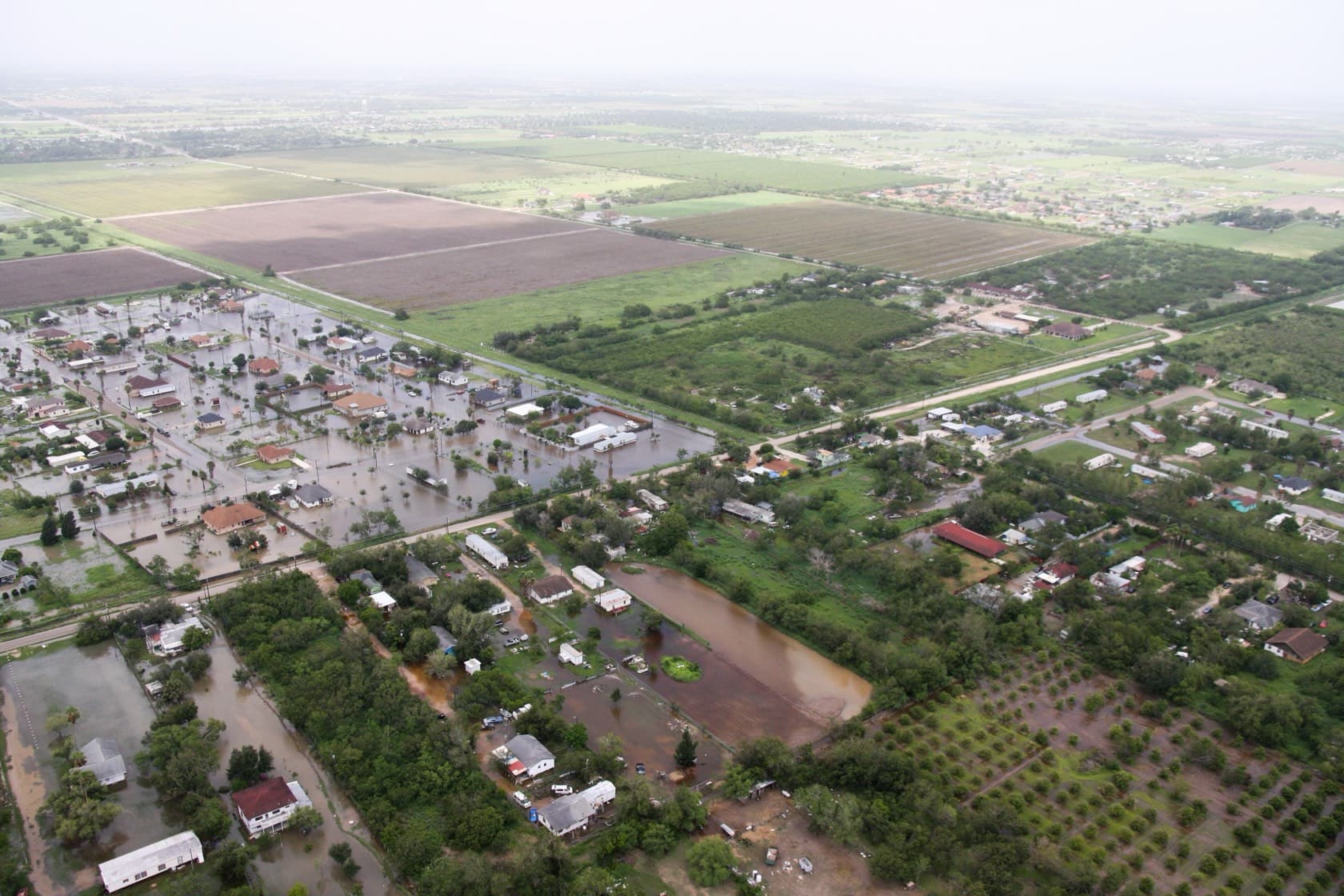
Quick answer
Plan to be on your own for 7 days. For 4 people that means 28 gallons of water (floods are when tap water goes on boil notice), about 56,000 calories of food that needs no cooking, documents in a waterproof bag, and a rule everyone already knows: nobody walks or drives through moving water. Most kitchens hold 3 to 4 days. This page shows you the exact gap.
Numbers are set for 4 people. Change your household size below and every quantity updates.
6 inches
Moving water that can knock an adult down
12 inches
Enough to float most cars
30 days
Flood insurance wait before coverage starts
1 gal
Water per person per day
How a flood actually unfolds
Watch issued
Conditions are right, water is not here yet. Quiet window: move cars to high ground, charge everything, put documents and medications in one waterproof grab bag.
Warning · Water rising
Move people, pets, and anything valuable up a level. Know where your electrical panel is, and if officials say leave, leave while streets are still streets.
During
The rule that does the most work: turn around, don't drown. Six inches of moving water takes your footing, a foot floats the car. Stay put, stay high, stay off the roads.
After · The long part
Floodwater is not rainwater: it carries sewage, fuel, and debris, and tap water often needs boiling until cleared. Photograph everything before you touch it. Mold starts inside 24 to 48 hours.
Your household's number
What do those 7 days take for your house?
The figures above are sized for a typical household. Set yours and you'll get the calories, gallons of water, and what they cost for your people. About a minute, no signup.
Food and water calculator
How much food and water does your household need?
Adults
Children
For how long
You'd need
49,000calories
plus 28 gallons of water, around $90 to buy.
For 2 adults, 2 children, 1 week.
That's the target. Provision Planner counts what you already have and shows you what's left to buy.
See how close you arePlay it out
Two inches an hour, three decisions
A quick role-play of how a flood week actually goes for a family of four. Pick what your household would honestly do.
Scene 1 of 3
Sunday evening. A flood watch covers your county through Tuesday, and the radar shows training storms, the kind that park over one spot and rain for hours. The creek behind the neighborhood is already talkative.
Prefer to read it straight through?
Scene 1
Sunday evening. A flood watch covers your county through Tuesday, and the radar shows training storms, the kind that park over one spot and rain for hours. The creek behind the neighborhood is already talkative.
If you it always drains. this street has never flooded: Mostly true, until the night it isn't. By 11pm the storm drain is a fountain and both cars are parked at the low end of the driveway. Nothing is lost yet, but every option you have left is wetter and more expensive than it was at 7pm.
If you spend 30 minutes moving what matters up and out: Cars to the church lot on the hill, documents and chargers into one bag upstairs, garage floor cleared onto shelves. It felt like overkill right up until the gutters started shouting. Now it just feels smart.
Field note: Flood damage is a height game. The difference between a soaked keepsake and a safe one is usually about three vertical feet, moved during the boring window before water arrives.
Scene 2
Monday, 6:40am. There is a lake where the intersection used to be, maybe a foot deep and moving. Your car sits on the far side. A pickup crosses slowly and makes it, wake slapping the mailboxes.
If you the truck made it. wade over and drive out before it gets deeper: Halfway across, the current tugs your knees sideways and the pavement under the water is not where you remember it. You make the far curb soaked, phone dark, and the car sputters at the first dip anyway. Now two things need rescuing and one of them is you.
If you the car has insurance. feet stay dry: You watch a sedan try it an hour later and stall mid-crossing, hazards blinking in the brown water. The tow bill is theirs. Your morning costs you a work-from-home day and another pot of coffee.
Field note: Moving water is heavier than it looks and hides what the road is doing underneath. Most flood vehicle losses happen in water a driver judged shallow enough. Cars are replaceable on a schedule; the crossing is not.
Scene 3
Wednesday. The water is gone from the street and down to a film in the garage. The fridge hums back on. Everything the water touched has a gray line on it, and the whole block smells like a wet basement.
If you rip everything out today, bare hands, windows open: Speed feels right but skips two steps that cost you later: no photos for the claim, and no gloves between you and whatever the water carried in. The adjuster asks for documentation you now have to reconstruct from memory.
If you photograph first, then gloves, boots, and a box fan: Twenty minutes of photos and a numbered list turn the claim from an argument into paperwork. Gloves and boots keep cleanup a chore instead of a clinic visit, and the fans get ahead of the mold clock.
Field note: Insurers pay on evidence. Photograph and list damage before removing anything, keep receipts for cleanup, and treat everything floodwater touched as contaminated until washed or tossed.
The flood checklist
People in your household
One page per scenario: quantities resize in place, and the link you share always shows this plan.
Your head start
0 of 7 days covered
0 of 13 essentials on hand
Tick what you already own.Save this as your real plan →Supplies buy you days. Gear keeps those days livable. Most families discover they start around day 3.
| Item | For 4 people | Why it matters | Covers | |
|---|---|---|---|---|
| Water · 28 gallons total | ||||
| Bottled water, 24-pack cases | 6 cases (about 17 gal) | Sealed, portable, splits between rooms and the car. | Days 1 to 5 | |
| 5-gallon water jugs | 3 jugs | The cheapest gallons you can store. Fill spares before the event, not during. | Days 6 to 7 | |
| Water purification tablets | 1 pack | Turns suspect tap or tub water into drinking water after day 7. | Backup | |
| Food, no cooking required | ||||
| Canned protein: tuna, chicken, beans | 18 cans | Eats straight from the can when the stove is out. | No cooking | |
| Canned vegetables and fruit | 20 cans | Fluids and vitamins while the fridge is dark. | No cooking | |
| Peanut butter | 2 large jars | 2,650 calories per jar, no prep, kids will actually eat it. | No cooking | |
| Crackers, tortillas, granola bars | 4 boxes plus a dozen bars | The bread aisle empties first. These keep for months instead of days. | No cooking | |
| Oats and shelf-stable milk | 6 cartons plus a canister of oats | Breakfast without power, and the milk needs no fridge until opened. | No cooking | |
| Power, light, and news | ||||
| Flashlights or headlamps | 5 flashlights | One per person plus a spare. Candles start fires in dark houses. | All week | |
| Batteries in every size you use | 2 packs per size | The thing that runs out on day 2 if you guess. | All week | |
| Phone battery banks, fully charged | 2 banks | Your phone is your flashlight, radio, and lifeline. Top the banks up the moment trouble is forecast. | All week | |
| NOAA weather radio, battery or crank | 1 | When cell towers and wifi fail, official updates still reach you here. | All week | |
| Health and documents | ||||
| First aid kit | 1 | Minor injuries spike during cleanup, exactly when help is hardest to reach. | All week | |
| Prescription medications | 14-day supply each | Pharmacies reopen slowly. Ask your pharmacist about an emergency refill before you need it. | 2 weeks | |
| Documents in a waterproof bag | IDs, insurance, cash in small bills | ATMs and card readers die with the power. | Grab and go | |
| Manual can opener | 1 | Most of the calories above are locked inside cans without it. | Critical | |
| Flood specific | ||||
| Rubber boots and heavy gloves | 4 sets | Floodwater carries sewage, fuel, and glass. Cleanup happens in boots, not sneakers. | After | |
| Sandbags or door flood barriers | 10 to 20 bags | A low doorway diverted for an hour can be the whole difference downstairs. | Before | |
| Unscented bleach | 1 bottle | Disinfects what the water touched, and 8 drops per gallon treats water in a pinch. | After | |
| Tarps and contractor trash bags | 2 tarps, 1 box of bags | Wet things leave the house fast. These are how. | After | |
Quantities land slightly above target on purpose: appetite and stress go up in a real emergency. Swap freely inside each category to match what your family actually eats. Print this page to take it shopping.
In the app
Your flood plan should not live on a printout
Provision Planner has a built-in Flood scenario. Add your supplies once and it tells you how many days you would last, what expires next, and what to restock. Live National Weather Service alerts are built in, so the flood warning and the plan live in the same place.
Run the flood scenarioFlood scenario
Water
7 days
Food
9 days
Power and light
5 days · restock
NWS flood alerts for your area
Live
Computed from your real inventory. Updates itself as things expire.
Frequently asked questions
How much water does a family of 4 need for a flood?
28 gallons: one gallon per person per day for 7 days. Floods are the disaster where stored water earns its keep, because flooded treatment systems put whole counties on boil-water notices for days after the water recedes.
Does homeowners insurance cover flooding?
Standard homeowners and renters policies do not cover flood damage. That is separate flood insurance, most commonly through the National Flood Insurance Program, and new policies typically wait 30 days before coverage starts. If flooding is on your mind, the paperwork has to happen a month before the water. Confirm details for your state and policy with your agent.
When should we evacuate instead of staying?
When officials say so, or when water threatens your safe room upstairs. Leave early while streets are passable: the most dangerous part of most floods is driving through water. A foot of moving water floats most cars, and flooded roads hide washouts underneath.
What do we do right after the water goes down?
Photograph and list all damage before touching anything, then work in boots and gloves. Treat tap water as suspect until officials clear it, watch for tripped breakers and wet outlets before turning power back on, and move fast on drying: mold gets its start within 24 to 48 hours.
Explore more scenarios
Every scenario gets the same treatment: the event, the supplies, the timeline, and your number.
 Scenario 01Hurricane
 Scenario 06Power Outage
 Scenario 10Water Outage
 Scenario 16Evacuation
 Scenario 17Shelter in Place34 scenarios, one libraryBrowse them all →
Go deeper: Flood Preparedness Checklist · Bathtub Water Storage, Done Right · 2-Week Supply Plan for 4 People · Food Storage Calculator
Water and calorie targets follow FEMA and Ready.gov emergency planning guidance; alert timing and water-safety rules follow the National Weather Service and CDC. Insurance details vary by policy and state. This is general planning guidance: adjust for allergies, medical needs, and what your household actually eats. If officials order an evacuation, leave. Photography: NASA image library and Pexels, used under their respective licenses.