Bathtub Water Storage: The 100-Gallon Move to Make Before a Storm
July 16, 2026 · 3min read · Reviewed against FEMA & CDC guidance
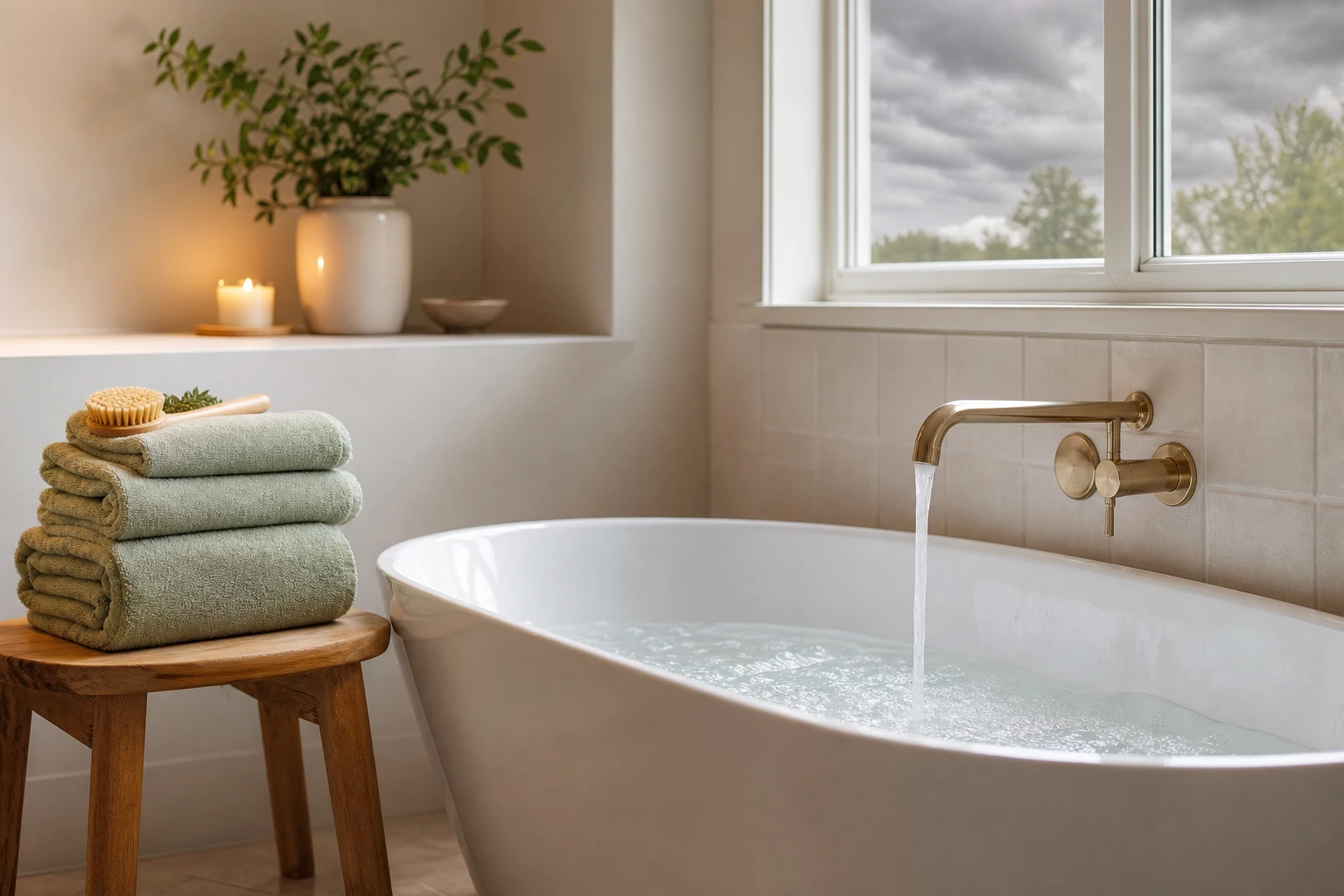
There is a 48-hour window before every hurricane when you can add up to 100 gallons of water storage to your house for the cost of opening a tap. Most people spend that window fighting over the last bottled water case at the store instead.
The move is the bathtub. A standard tub holds 40 to 60 gallons, and with a food-grade liner it becomes sealed, drinkable storage. Fill it when the watch is issued, and your family's water problem is mostly solved before the wind arrives.
Here is how to do it properly, because the bare-tub version has real limits.
What a bare tub is actually good for
Fill an unlined tub before a storm and you have 40-plus gallons of utility water: flushing toilets (a bucket poured into the bowl flushes it), washing hands and dishes, and cleaning wounds after boiling.
What you do not have is drinking water. Three problems:
- Residue. Soap film and bathroom cleaner cling to every tub surface, and you cannot rinse them away completely.
- The drain. Tub stoppers seep. Families have woken up the morning after landfall to a half-empty tub.
- Exposure. The water sits open to dust, insects, curious pets, and small children, for days.
Bare tub water can become drinking water in a pinch, but it needs treatment first. Our emergency water purification guide covers boiling and bleach ratios. Better plan: keep it for utility use and make your drinking water a separate, sealed story.
The liner upgrade: sealed and drinkable
A bathtub liner, the best known is the WaterBOB, is a heavy food-grade plastic bladder that lies in your tub and fills from the faucet. It holds up to 100 gallons, sealed away from the tub surface, the drain, and the air. A hand pump siphons water out into pitchers.
The difference in what you get:
| Bare tub | Lined tub | |
|---|---|---|
| Capacity | 40 to 60 gallons | Up to 100 gallons |
| Drinkable | Only after treatment | Yes |
| Holds through drain seep | No | Yes |
| Keeps out debris and pets | No | Yes |
| Cost | Free | About $35, single use |
At the standard 1 gallon per person per day, 100 sealed gallons is over three weeks for a family of four's drinking needs, from one $35 liner filled in half an hour. That is the cheapest gallons-per-dollar move in all of emergency water, with one catch: it only exists if you fill it before pressure drops.
Buy the liner now, not at the watch announcement. It lives folded in a box the size of a hardcover book, and it will be sold out regionally the day the forecast cone appears.
The pre-storm water routine
When a hurricane watch is issued, run this sequence, it takes under an hour:
- Fill the lined tub first (20 to 30 minutes). Start it before anything else.
- Fill every large pot and pitcher with tap water for cooking.
- Top off stored containers if your rotation left any partial.
- Freeze what you can. Bags of water in spare freezer space become ice packs that later melt into drinking water.
- Know your shutoff. If contamination is announced, close the main valve to protect the clean water in your pipes and water heater.
The rest of the storm checklist, food, power, documents, lives in our hurricane season preparedness guide.
Where the tub fits in the bigger picture
A filled tub is a surge tactic, not a water plan. It requires warning, and hurricanes give you that, but earthquakes, main breaks, and contamination notices do not. The CDC's baseline of 2 weeks of stored water, 56 gallons for a family of four, has to exist before any forecast. Our guide on how much water to store for an emergency shows what that looks like on real shelves.
The failure mode is thinking you are covered without ever adding it up: a tub you'd fill, some bottled cases of unknown age, a jug somewhere in the garage. Provision Planner does the adding for you. Log what you actually have and it shows how many days your family is covered now, before the forecast cone ever points your way.
Frequently asked questions
- How much water does a bathtub hold for an emergency?
- A standard tub holds 40 to 60 gallons, and large soaking tubs approach 100. A tub liner like the WaterBOB holds up to 100 gallons in a food-grade bladder, which is more than two weeks of drinking water for a family of four at 1 gallon per person per day.
- Is bathtub water safe to drink?
- Water in a bare tub is not reliably drinkable. Tubs hold soap residue and cleaner film, drains seep, and the surface sits open to the room. Treat bare tub water as flushing and washing water, or purify it before drinking. A food-grade liner keeps the same water sealed and potable.
- When should you fill the bathtub before a hurricane?
- When a hurricane watch is issued for your area, roughly 48 hours out. Filling takes 20 to 30 minutes and costs nothing, and if the storm misses you the water goes down the drain. Waiting until the storm arrives risks losing pressure before the tub is full.
Food and water calculator
How much food and water does your household need?
Adults
Children
For how long
You'd need
98,000calories
plus 56 gallons of water, around $185 to buy.
For 2 adults, 2 children, 2 weeks.
That's the target. Provision Planner counts what you already have and shows you what's left to buy.
See how close you areYou did the reading. Now get your number.
Provision Planner does this article's math for your real household, automatically, and keeps it current as supplies come and go.