The 1-Year Food Supply: What It Really Costs and Where It Fits
July 7, 2026 · 3min read · Reviewed against FEMA & CDC guidance
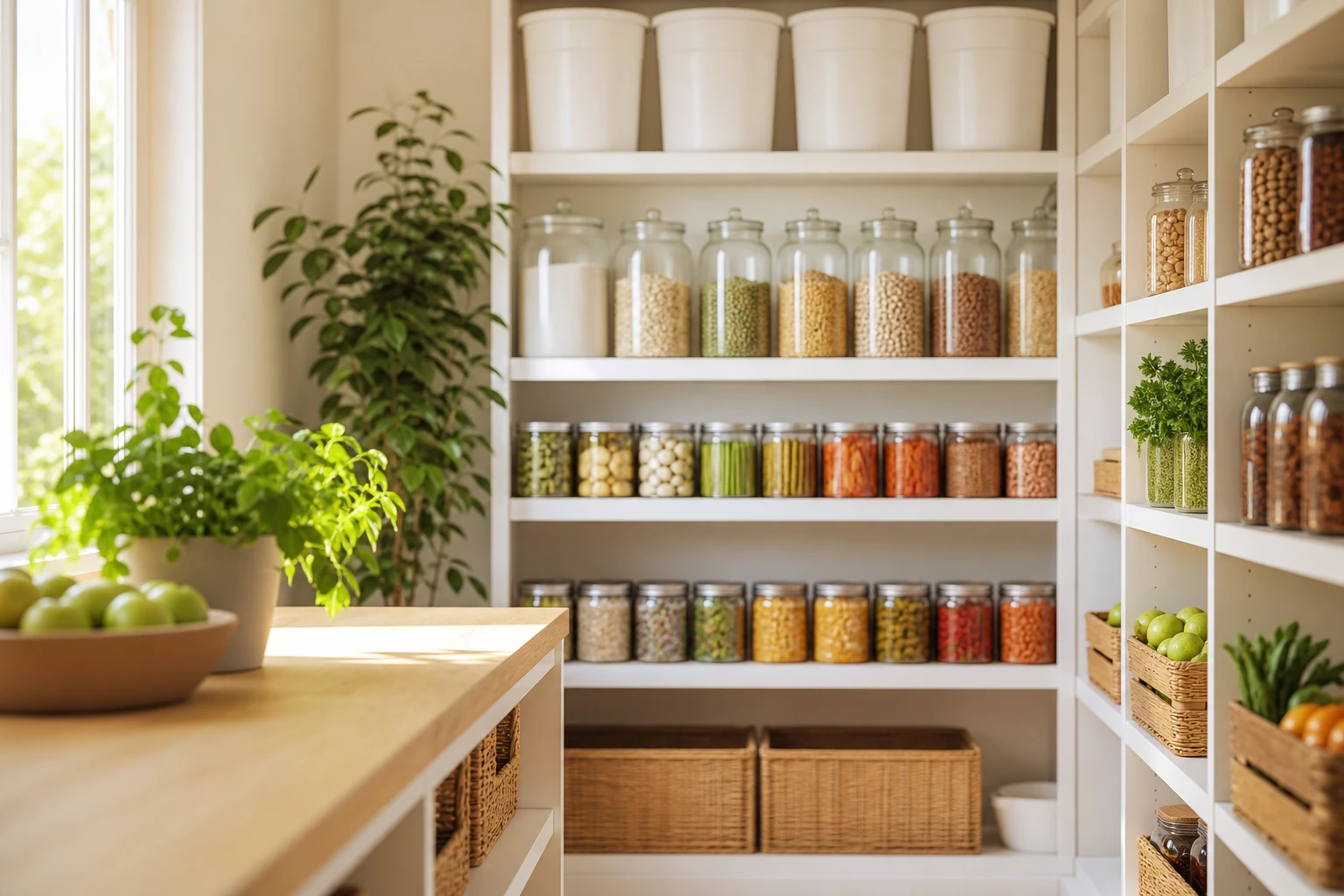
A year of food sounds like a bunker project until you see the actual numbers. Then it turns into something more surprising: a math problem about wheat, shelving, and patience.
Here is the anchor figure. One adult needs about 730,000 calories per year (2,000 per day, FEMA's planning baseline). For a family of four, that is roughly 2.9 million calories. The traditional staples method, refined over decades by long-term storage guides, hits that number for about $400 to $600 per person if you build it yourself. Prepackaged year buckets run $2,000 to $4,000 per person. Same calories, wildly different bill.
What a year of staples actually is
Long-term food storage rests on a handful of foods that keep for decades when packed right. The classic per-adult, per-year amounts:
| Staple | Amount per adult | Calories (approx.) |
|---|---|---|
| Grains (wheat, rice, oats, pasta) | 300 lbs | 480,000 |
| Beans and legumes | 60 lbs | 95,000 |
| Sugar and honey | 60 lbs | 100,000 |
| Cooking oil | 10 quarts | 76,000 |
| Powdered milk | 16 lbs | 29,000 |
| Salt | 8 lbs | 0 |
That is the survival skeleton: about 780,000 calories, slightly over target on purpose. These amounts trace back to the classic LDS year-supply tradition, and the LDS food storage calculator scales the whole table to your exact household in one step. Real menus then get built by layering on what you already store for shorter emergencies: the canned proteins, vegetables, fruit, and comfort foods from your 3-month supply, rotated through normal cooking.
Packed properly, the staples last 25 to 30 years. That packing, oxygen absorbers and sealed containers, is its own small skill, and our beginner's guide to long-term storage plus the Mylar bag walkthrough cover it step by step.
Food and water calculator
How much food and water does your household need?
Adults
Children
For how long
You'd need
2,555,000calories
plus 1,460 gallons of water, around $4,790 to buy.
For 2 adults, 2 children, 1 year.
That's the target. Provision Planner counts what you already have and shows you what's left to buy.
See how close you areBuckets or DIY?
The honest comparison, since we sell neither:
- DIY staples win on price by 4 to 6 times, use foods you can rotate into daily cooking, and let you match what your family eats. They cost you a weekend of packing and some learning.
- Freeze-dried year kits win on convenience and water math (just add hot water), weigh far less, and are genuinely useful for the first chaotic days of an emergency. They lose on price, portion honesty (check the calories per day on the label; many "1-year" kits assume 1,200 to 1,500 calories a day), and menu fatigue.
A sensible year plan is mostly DIY staples with a small freeze-dried buffer, not a pallet of buckets.
Where does a year of food physically go?
Less room than you think. A year of staples for one adult is roughly 500 lbs, which stores in about fifteen 5-gallon buckets plus shelving for cans: one sturdy shelving unit and the floor beneath it. A family of four needs a small room's worth of wall, a corner of a basement, or a closet system planned with intent.
Two placement rules matter more than square footage: keep it cool (50 to 70°F ideal, under 85°F per USDA guidance) and dark. A hot garage quietly halves shelf life.
The water asterisk
There is no realistic 365-gallon-per-person water tank in this plan. The standard approach: store 2 to 4 weeks of water (1 gallon per person per day, CDC guidance) and pair it with serious purification capacity, a quality filter plus tablets or bleach, so any local water source can refill you indefinitely. Grain-heavy storage also needs cooking water, which is one more reason purification, not storage volume, is the year-scale answer.
The real failure mode of a year supply
Nobody fails a year supply by buying the wrong wheat. They fail it by losing track. Eighteen months in, the oil is rancid because it was bought first and used never, the powdered milk expired, a third of the buckets are mystery contents, and the honest days-of-food number is unknown, which was the whole point of the project.
That inventory problem is what Provision Planner exists to solve. Every bucket, can, and jar goes in once, with dates, and the app keeps the running answer: how many days your household is actually covered for, what needs rotating this quarter, and what to buy next. A year of food only works if you know what the year contains.
Frequently asked questions
- What does a one-year food supply look like?
- Per person, roughly 300 lbs of grains and 60 lbs of beans or legumes, plus fats, sugars, dairy, and canned goods, totaling about 730,000 calories. It's built on bulk staples, with a deep pantry of foods you actually eat layered on top.
- How much does a one-year food supply cost?
- DIY from bulk staples runs roughly $700 to $1,500 per person; pre-packaged bucket kits cost $2,000 to $4,000+ for similar calories. Buying rice, beans, oats, and canned goods yourself is far cheaper than freeze-dried year kits.
- How much space does a year of food take?
- About 8 to 12 five-gallon buckets of staples per person plus canned and pantry goods, roughly the footprint of a small closet or a few square feet of stacked storage. Water can't be stored a year at that volume, so plan filtration too.
You did the reading. Now get your number.
Provision Planner does this article's math for your real household, automatically, and keeps it current as supplies come and go.