The Hurricane Supplies List (Print It, Shop It)
July 11, 2026 · 4min read · Reviewed against FEMA & CDC guidance
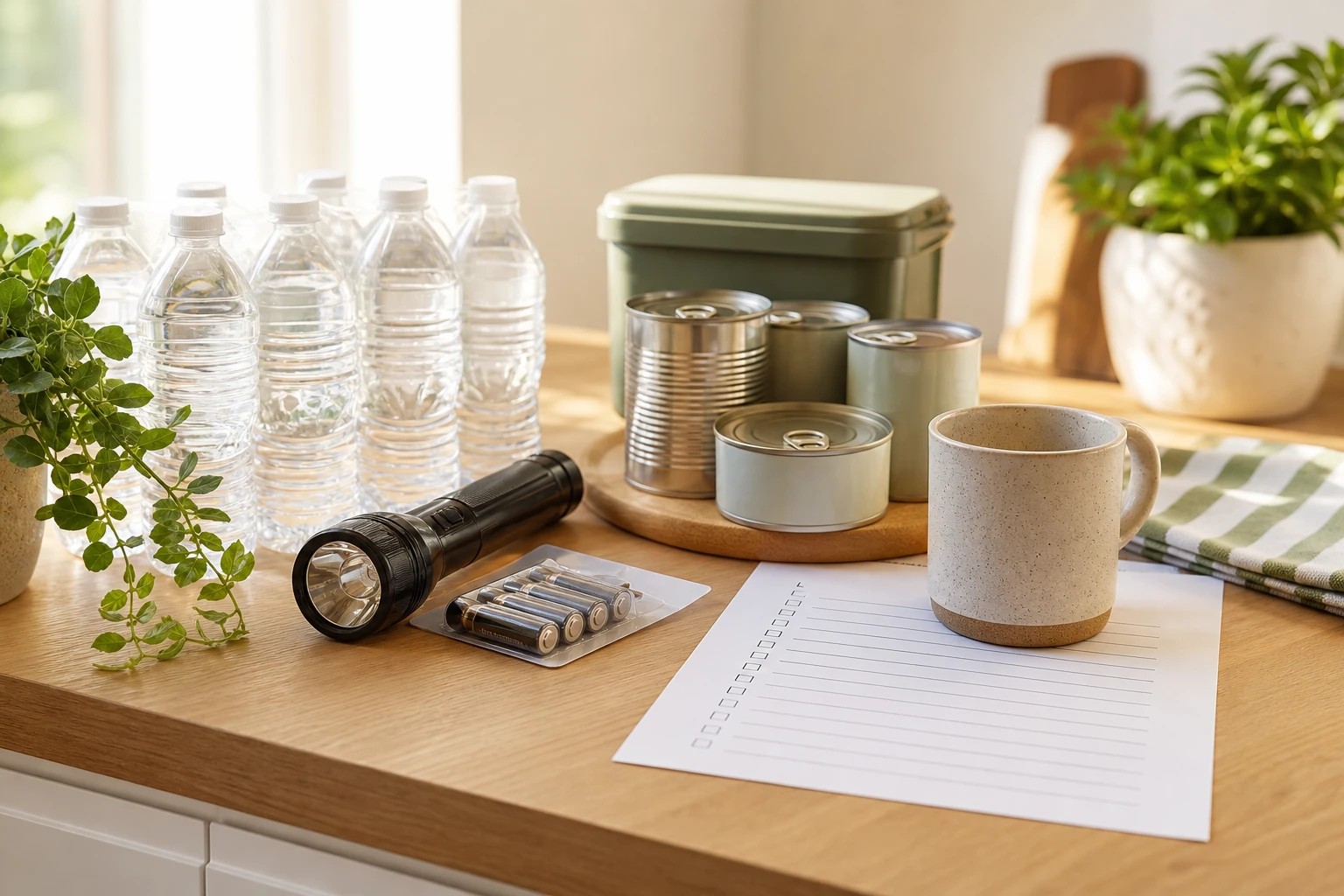
Picture your grocery run the afternoon a storm gets a name: humming fluorescent lights, a picked-over water aisle, and a fuzzy memory that you needed "batteries and something to eat." A list you printed back in calm weather turns that scene into a five-minute errand with a full cart.
For a family of four planning to ride out two weeks without power or safe tap water, the target is 56 gallons of water and roughly 112,000 calories of food that needs no cooking, plus a small stack of light, power, and paperwork. Ready.gov now treats the old three-day rule as a floor for hurricanes, because after a major storm help routinely takes longer than that to arrive. Here is the entire list on one page, grouped the way a store is so you can walk it aisle by aisle.
Water: the heaviest thing on the list
The rule from FEMA and Ready.gov is 1 gallon per person per day, split between drinking and basic hygiene. Two weeks of that is 14 gallons per person, or 56 gallons for a family of four. Buy it as a mix: flats of half-liter bottles for grab-and-go, plus a few rigid jugs for the bulk. If you want to shave the shopping trip, the full breakdown by household size lives in the water storage math, including how to stretch what you buy with clean containers you already own.
Food and water calculator
How much food and water does your household need?
Adults
Children
For how long
You'd need
98,000calories
plus 56 gallons of water, around $185 to buy.
For 2 adults, 2 children, 2 weeks.
That's the target. Provision Planner counts what you already have and shows you what's left to buy.
See how close you areFood: two weeks you never have to heat
Assume the stove, the microwave, and eventually the fridge are all out. That points you at calorie-dense food you can eat straight from the package: canned beans and chili with pull tabs, peanut butter, tuna and chicken pouches, crackers, nuts, dried fruit, and shelf-stable milk. Plan for about 2,000 calories per adult per day so nobody is quietly rationing on day four. The shoppable two-week version is already itemized in the 2-week food supply list, and if you want ideas beyond canned beans, the no-cook emergency foods guide has the rest.
Light, power, and information
- Flashlight or headlamp for every person, plus a spare set of batteries
- A battery or hand-crank radio (the NOAA weather band is the feature that matters)
- Phone chargers and at least one charged power bank per adult
- A lighter or matches, and battery lanterns rather than candles near curtains
Health, hygiene, and paperwork
- First-aid kit and any daily prescriptions, with a 7-to-14-day buffer you start requesting from the pharmacy in June
- Baby, senior, and pet needs: formula, diapers, wipes, pet food, and a leash
- Hygiene: hand sanitizer, wet wipes, trash bags, and a bucket with liners if the sewer backs up
- Documents in a waterproof pouch (IDs, insurance, medication list) and cash in small bills, because card readers die with the power
The one-page list to print
| Category | Per person | Family of 4 | Aisle |
|---|---|---|---|
| Water | 14 gallons | 56 gallons | Water and beverages |
| No-cook food | ~28,000 calories | ~112,000 calories | Canned goods, snacks |
| Flashlight or headlamp | 1 | 4 | Hardware |
| Batteries (AA/AAA packs) | 1 pack | 2 to 3 packs | Hardware |
| NOAA radio | 1 per household | 1 | Electronics |
| Power bank | 1 | 2 | Electronics |
| First-aid kit | 1 per household | 1 | Pharmacy |
| Prescriptions (buffer) | 7 to 14 days | per person | Pharmacy |
| Cash (small bills) | as able | as able | ATM before the run |
Tape it inside a cabinet door. When a system spins up in the Atlantic, you already know exactly what to grab, and you can hand the printed copy to whoever is closer to the store. If you also want the timeline of what to do at the watch and the warning, the phased hurricane season checklist picks up where the shopping list ends.
A printed list is a snapshot, not your kitchen
The catch with any list on paper is that it cannot see your house. It does not know you already have nine gallons in the garage, that half the canned goods expired last spring, or that the family-of-four number quietly changed the week the baby arrived. So people re-buy what they own and stay short on what they forgot.
Provision Planner turns the printed list into a live count: scan what you buy, mark what is already on the shelf, and watch your coverage climb toward the full two weeks measured in days rather than guesses. Run its hurricane scenario in June, and you find the gaps with a month to spare instead of under a flashlight.
Frequently asked questions
- What supplies do you need for a hurricane?
- Two weeks of water (1 gallon per person per day) and no-cook food, a first-aid kit, medications, flashlights, a battery or crank radio, batteries and power banks, cash in small bills, and waterproofed documents. Plan for no power or safe tap water for days.
- How much water do you need for a hurricane?
- One gallon per person per day, and Ready.gov recommends two weeks for hurricanes rather than the old three-day rule. For a family of four that is 56 gallons, covering drinking and basic hygiene while the taps are unreliable.
- What food is best to stock for a hurricane?
- Shelf-stable food that needs no cooking: canned goods with pull tabs, peanut butter, nuts, dried fruit, crackers, and ready-to-eat pouches. Aim for about 2,000 calories per adult per day so nobody is rationing while the power is out.
You did the reading. Now get your number.
Provision Planner does this article's math for your real household, automatically, and keeps it current as supplies come and go.