The Best Water Storage Containers (and the Ones That Fail)
May 19, 2026 · 2min read · Reviewed against FEMA & CDC guidance
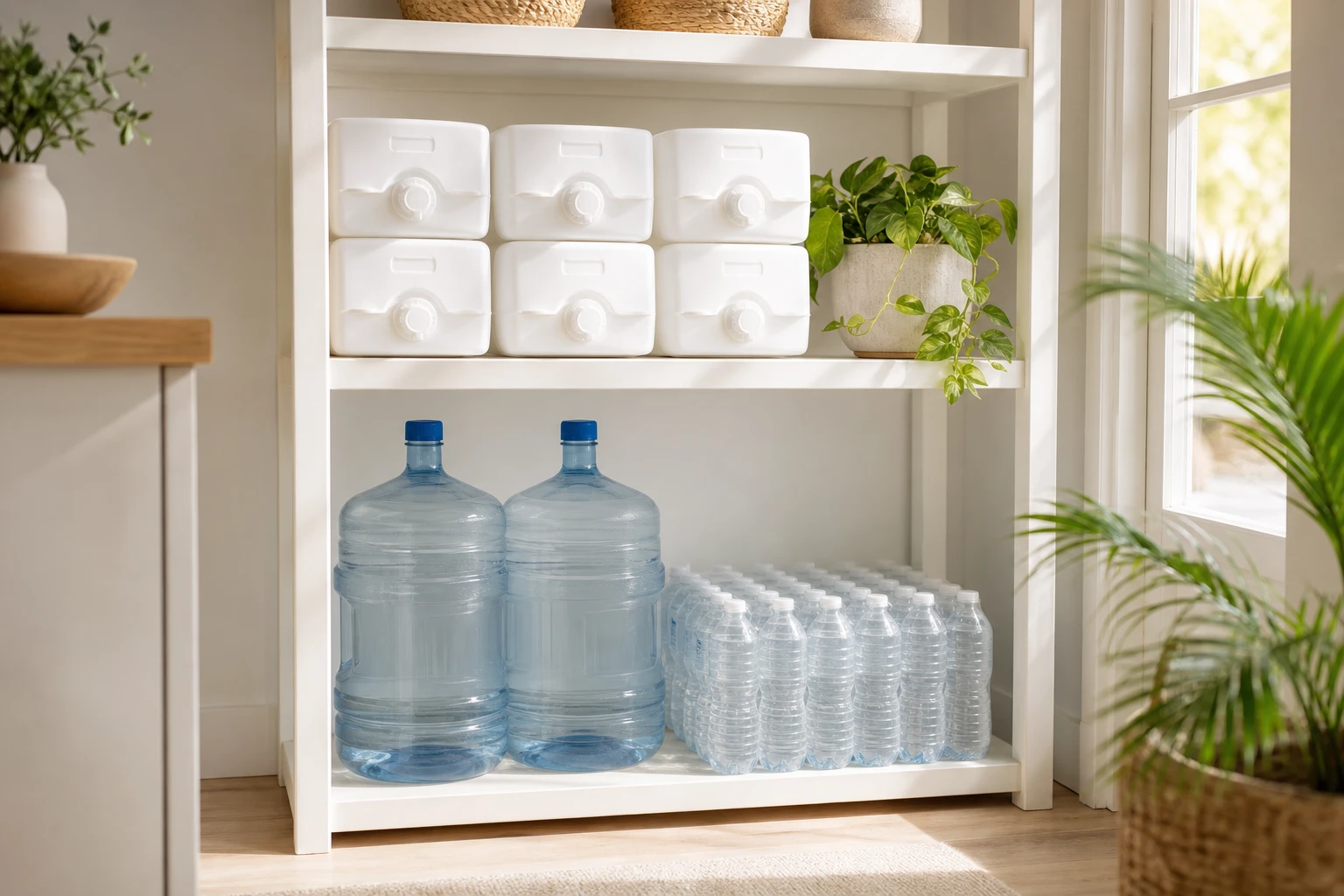
Water is the least forgiving supply, and the container is the whole ballgame: the difference between a two-week reserve and a puddle with a plastic taste. Here's the honest comparison, from grab-and-go to bulk.
The lineup
| Container | Best for | Watch out for |
|---|---|---|
| Bottled water cases | Drinking, zero effort, portable | Thin plastic hates heat; rotate yearly |
| 5 to 7 gallon jugs | The workhorse: stackable, carryable | 40+ lbs full; buy the spigot |
| Stackable "bricks" | Small spaces, under-bed, closets | Cost per gallon is highest |
| 55-gallon barrel | Bulk at home | Needs a pump, a dolly, and a forever spot |
| Bathtub liner (one-time) | Storm warning, 60 to 100 gallons fast | Single-use; buy before hurricane season |
A useful mental model: bottles for drinking, jugs for cooking and washing, one big option if you have the floor. The per-person math tells you how many of each.
What "food-grade" actually means
Look for HDPE plastic marked food-safe (recycling symbol 2 is the usual tell) sold for water storage. Blue is the convention for a reason: it blocks light, and light grows algae. Fill from the tap, cap tight, store cool and dark, replace every 6 months, and you don't need to add anything to municipal water for that cycle.
The containers that fail people
- Milk jugs: the classic mistake. The plastic biodegrades by design and the residue can't be fully sanitized. Months, not years.
- Non-food-grade totes and jerry cans: the plastic leaches; "it held water fine" is not the standard for what your kids drink.
- Glass carboys: food-safe, yes, and one drop on concrete ends your reserve.
- One giant barrel as the only plan: 460 pounds of water you can't move, evacuate with, or easily dispense. Bulk is a layer, not the plan.
If stored water ever smells off or you've lost track of its cycle, don't debate it: purify it or replace it.
Count gallons, not containers
Container shopping feels productive; coverage is what counts. Log your bottles, jugs, and barrels in Provision Planner alongside your food and it does the division for your actual household: how many days of water you hold today, and when your refill-cycle containers come due. The two-week goal stops being a guess.
Frequently asked questions
- What is the best container for storing water?
- For most households, stackable water bricks or new food-grade 5-gallon jugs balance capacity and portability; cases of bottled water are the easiest low-effort option. 55-gallon barrels store the most per footprint but need a pump and can't be moved once full.
- What does food-grade mean for water containers?
- Food-grade plastic is made without harmful additives that can leach into water and is safe for long-term storage. Look for a container rated for potable water, and don't reuse containers that held non-food liquids or thin single-use bottles.
- What water containers should you avoid?
- Avoid reusing milk jugs and juice bottles (they harbor residue and fail at the seams), non-food-grade plastics, and any container you can't fully clean and seal. These leak, crack, or contaminate stored water over time.
Food and water calculator
How much food and water does your household need?
Adults
Children
For how long
You'd need
98,000calories
plus 56 gallons of water, around $185 to buy.
For 2 adults, 2 children, 2 weeks.
That's the target. Provision Planner counts what you already have and shows you what's left to buy.
See how close you areYou did the reading. Now get your number.
Provision Planner does this article's math for your real household, automatically, and keeps it current as supplies come and go.