Food Storage Without a Basement: Where It Actually Goes
June 16, 2026 · 3min read · Reviewed against FEMA & CDC guidance
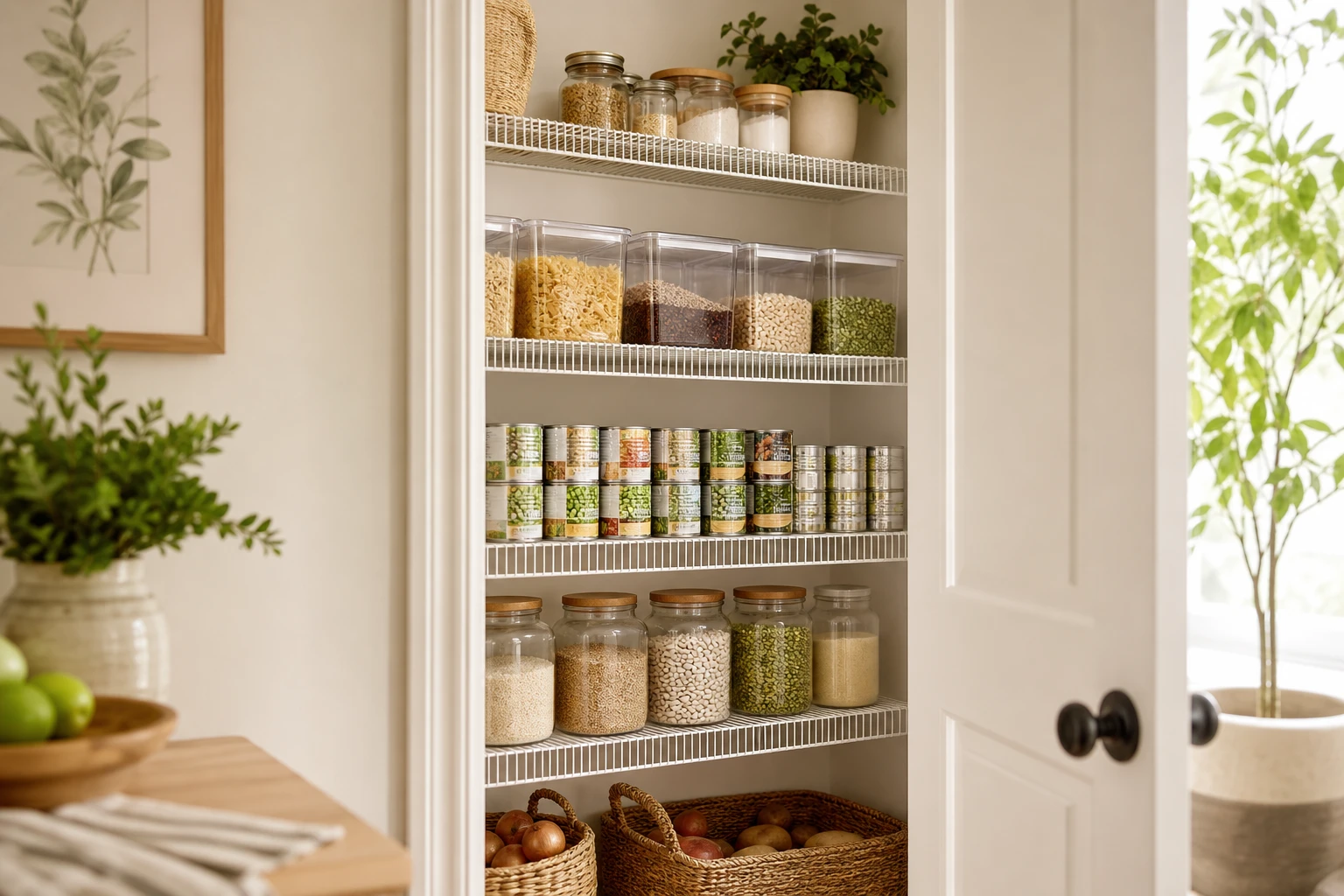
"Store food in a cool, dark place" is easy advice in a house with a basement. In the other half of American homes, slab-built ranches, warm-climate houses, apartments, it reads like a joke. No basement, so... the garage? That instinct, unfortunately, is the one that ruins the most food.
The real answer: a slab home has plenty of good storage, just not where people first look. The skill is reading your house by temperature. Canned and dry food wants 50 to 70°F, and under 85°F at the worst (USDA guidance); every 18-degree rise roughly halves the shelf life of canned goods.
Every spot in a basement-less home, ranked
| Location | Temp behavior | Verdict |
|---|---|---|
| Interior closets | Stable, tracks your thermostat | Best. Prime shelf real estate |
| Under beds | Stable, dark, huge area | Excellent for bins and water |
| Interior hallway cabinets | Stable | Great for cans |
| Pantry or kitchen cabinets | Mostly stable; avoid next to oven and dishwasher | Good, mind the hot spots |
| Laundry room | Warm and humid cycles | Only for sealed bins, top shelves |
| Coat closet floor | Stable | Good; boots and buckets coexist |
| Garage | 40 to 110°F+ swings | No for food and water |
| Attic | Can pass 130°F in summer | Never |
| Exterior sheds | Same swings as garage plus pests | No |
The pattern: interior beats exterior, low beats high, and anything sharing a wall with the outdoors is a worse spot than anything that does not.
Food and water calculator
How much food and water does your household need?
Adults
Children
For how long
You'd need
98,000calories
plus 56 gallons of water, around $185 to buy.
For 2 adults, 2 children, 2 weeks.
That's the target. Provision Planner counts what you already have and shows you what's left to buy.
See how close you areTurning closets into the basement you do not have
- One freestanding shelving unit transforms a closet: five shelves where there was one, no drilling, about $40. Deep closets take two units in an L.
- Under-bed bins hold a startling amount: a queen bed hides roughly eight 41-quart flat bins, which is most of a family's two-week canned goods, or ten cases of water.
- Think in zones: a "use first" shelf in the kitchen you rotate through daily cooking, and "deep storage" bins in closets and under beds checked quarterly. First in, first out between them.
- Label the outward face. Storage you cannot read gets forgotten, and forgotten is how food expires. (This and the other classics are in our food storage mistakes list.)
Water follows the same map: under beds and closet floors, never the garage, where summer heat degrades plastic containers and winter can split them.
What about long-term storage without a cool cellar?
Slab homes can still run 25-year staples. The move is packaging that forgives temperature better: Mylar bags with oxygen absorbers inside sealed buckets, stored in interior closets, handle a 72°F hallway fine. What they cannot forgive is the garage; even perfect packaging loses years to heat swings, and canned food loses quality fastest of all.
If a room regularly clears 85°F in summer, put the paper goods and gear there and keep the calories in the interior core of the house.
Scattered storage needs a map
Here is the trade you make without a basement: instead of one room you can survey at a glance, your supply lives in six places: two closets, three beds, a hallway cabinet. Each spot is individually excellent and collectively invisible. Nobody can stand in a doorway and see what the house holds, which is how a family with plenty of storage still runs out of the things that mattered.
That map is what Provision Planner keeps for you. Scan items in as you stow them, tag the location, and the app shows the whole scattered system as one picture: how many days of food and water the house really holds, what is expiring, and exactly which closet it is hiding in. No basement required, just one honest inventory.
Frequently asked questions
- Where do you store food without a basement?
- Rank spots by temperature: interior closets, under beds, and cabinets away from heat sources are best. Avoid the garage and attic, which get too hot. A basement-less home has plenty of cool, dark space once you look closet by closet.
- Is it OK to store food in a closet?
- Yes. Interior closets are one of the best spots in a basement-less home: cool, dark, and stable. Use shelving or stackable bins, keep food off the floor, and reserve the coolest closet for long-term staples.
- Can you store food long-term without a cool cellar?
- Yes, but heat shortens shelf life, so pick your coolest interior space and seal staples in mylar with oxygen absorbers to buy margin. A consistent 70-degree closet still supports many years of storage for rice, beans, and oats.
You did the reading. Now get your number.
Provision Planner does this article's math for your real household, automatically, and keeps it current as supplies come and go.