Emergency Water Sources Hiding in Your House (and How to Get to Them)
July 16, 2026 · 3min read · Reviewed against FEMA & CDC guidance
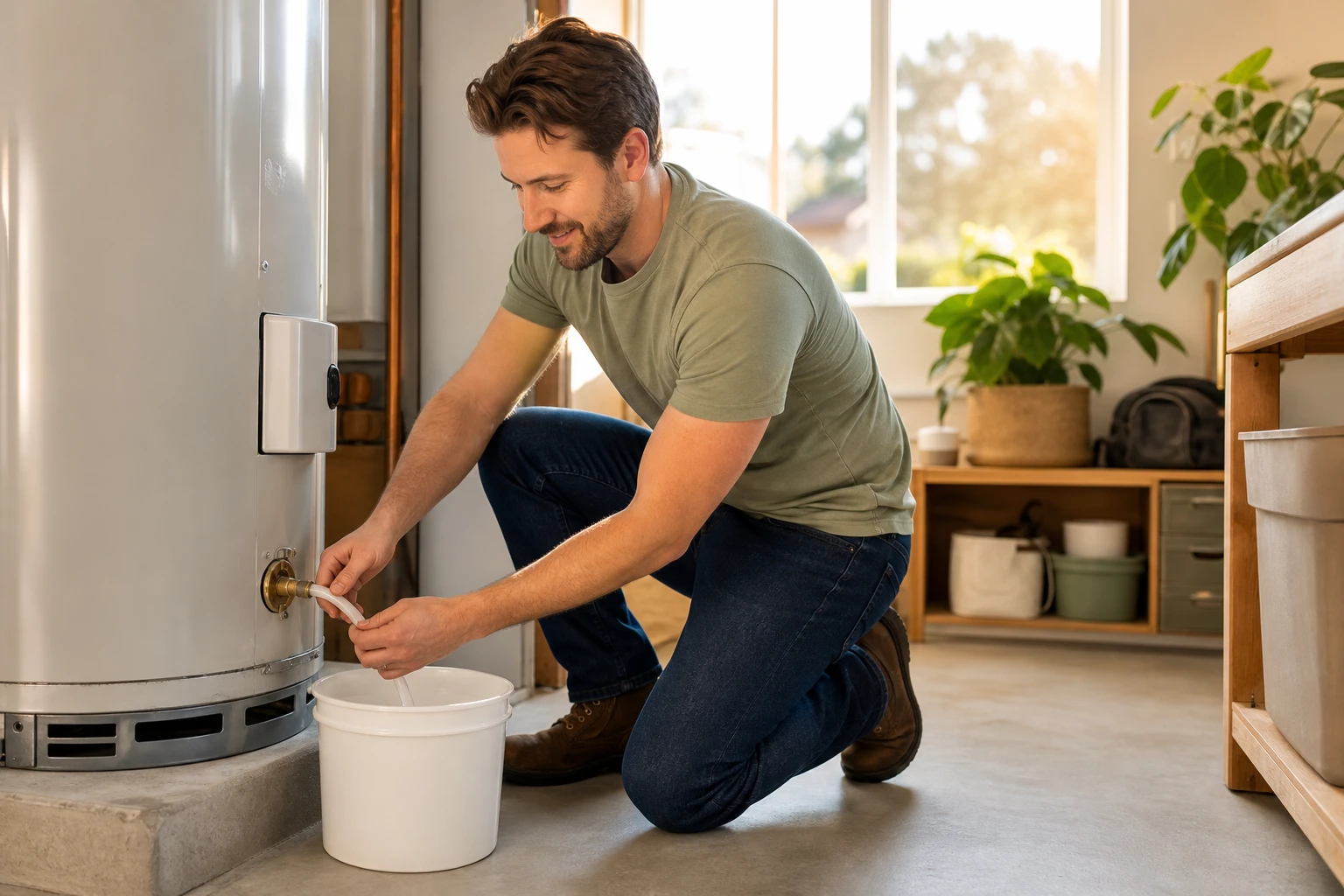
Before you own a single storage container, your house is already holding roughly 50 gallons of drinkable water. Most people just don't know where it is, or how to get it out safely when the taps stop.
The big three: your water heater (30 to 60 gallons), your pipes (a few gallons), and your freezer's ice (a gallon or two, already pure). Add the toilet tank, the one upstairs that nobody put a blue tablet in, and the liquid in your canned goods, and a typical home quietly covers several days for a family of four without a single water jug purchased.
Here is where every gallon hides, and how to reach it.
The water heater: your biggest hidden tank
A standard tank water heater holds 30 to 60 gallons, with 40 to 50 being the most common. That alone is nearly a week of drinking water for a family of four at the FEMA standard of 1 gallon per person per day.
Getting it out safely:
- Kill the power first. Flip the breaker for an electric heater, or turn the gas valve to off. A heating element firing in a draining tank can crack the tank or start a fire.
- Close the cold water intake valve on top, so you are not pulling questionable municipal water into your clean tank during a contamination event.
- Open a hot water tap anywhere in the house. This lets air in so the tank can drain.
- Drain from the valve at the bottom of the tank into clean containers. A short garden hose section helps.
- Let the first quart or two run off. Sediment settles at the bottom of every tank; it is harmless minerals mostly, but you want the clear water above it.
If the water has been sitting warm for days, disinfect it before drinking. Our emergency water purification guide covers boiling and bleach ratios.
Tankless heater? You skip this section, which is a real argument for keeping more stored water on the shelf.
Every other source, ranked
| Source | Gallons | Safe to drink? |
|---|---|---|
| Water heater tank | 30 to 60 | Yes, disinfect if stale |
| Pipes in the house | 2 to 4 | Yes |
| Ice and ice maker bin | 1 to 2 | Yes, melt first |
| Toilet tank (not bowl) | 3 to 5 | Only if free of cleaner tablets, then disinfect |
| Canned goods liquid | A few quarts | Yes, and it carries calories |
| Pool, spa, waterbed | Hundreds | No. Hygiene and flushing only |
Draining your pipes is a two-tap trick: open the highest faucet in the house to let air in, then collect from the lowest faucet or hose bib. Gravity hands you everything sitting in the lines.
The toilet tank is cleaner than its reputation, it is the same municipal water that feeds your kitchen tap, held in a ceramic box. The rules: tank only, never the bowl, and skip it entirely if you use drop-in cleaner tablets. Disinfect before drinking.
The freezer is the overlooked one. A full ice bin is a gallon or more of already-purified water, and it was keeping your food cold anyway.
What to do in the first ten minutes of an outage
When a main breaks or a boil notice hits, water in your pipes and tank is from before the problem. Protect it:
- Fill the bathtub and every large pot immediately, while pressure lasts.
- Close the main shutoff valve so contaminated water cannot backflow into your home's plumbing.
- Turn off the water heater's intake so the tank stays sealed as your reserve.
Those three moves can double your usable supply, and they cost nothing today except knowing where your shutoff valve is. Go find it now; that is this article's homework.
Found water is a bridge, not a plan
Everything above buys your family days, not weeks. The CDC's recommendation is working toward 2 weeks of stored water, which for a family of four is 56 gallons on purpose, not 50 gallons by accident. Our guide on how much water to store turns that into a shopping list that fits in a closet.
The harder question is knowing where you actually stand across found water, stored jugs, and bottled cases. Provision Planner tracks your real supply and shows the number that matters in one glance: how many days your household is covered, and what to add next to reach two weeks.
Frequently asked questions
- What are safe emergency water sources in your home?
- Your water heater tank (30 to 60 gallons), the water in your pipes (a few gallons), melted ice from the freezer, and the toilet tank (not the bowl) if it is free of chemical cleaners. Liquid from canned vegetables and fruit counts too.
- How do you get water out of a water heater in an emergency?
- Turn off the power or gas first, then close the cold water intake, open a hot water tap somewhere in the house to let air in, and drain from the valve at the bottom of the tank. Let the first flush run clear to clear sediment, and disinfect if the water has been sitting.
- Can you drink pool or waterbed water in an emergency?
- Not as drinking water. Pool and spa water carries concentrated treatment chemicals, and waterbed vinyl leaches plasticizers. Save both for flushing toilets and washing. For drinking, use your water heater, pipes, ice, and stored supply first.
Food and water calculator
How much food and water does your household need?
Adults
Children
For how long
You'd need
98,000calories
plus 56 gallons of water, around $185 to buy.
For 2 adults, 2 children, 2 weeks.
That's the target. Provision Planner counts what you already have and shows you what's left to buy.
See how close you areYou did the reading. Now get your number.
Provision Planner does this article's math for your real household, automatically, and keeps it current as supplies come and go.