Emergency Preparedness With a Baby: Formula, Food, and Supplies
June 23, 2026 · 3min read · Reviewed against FEMA & CDC guidance
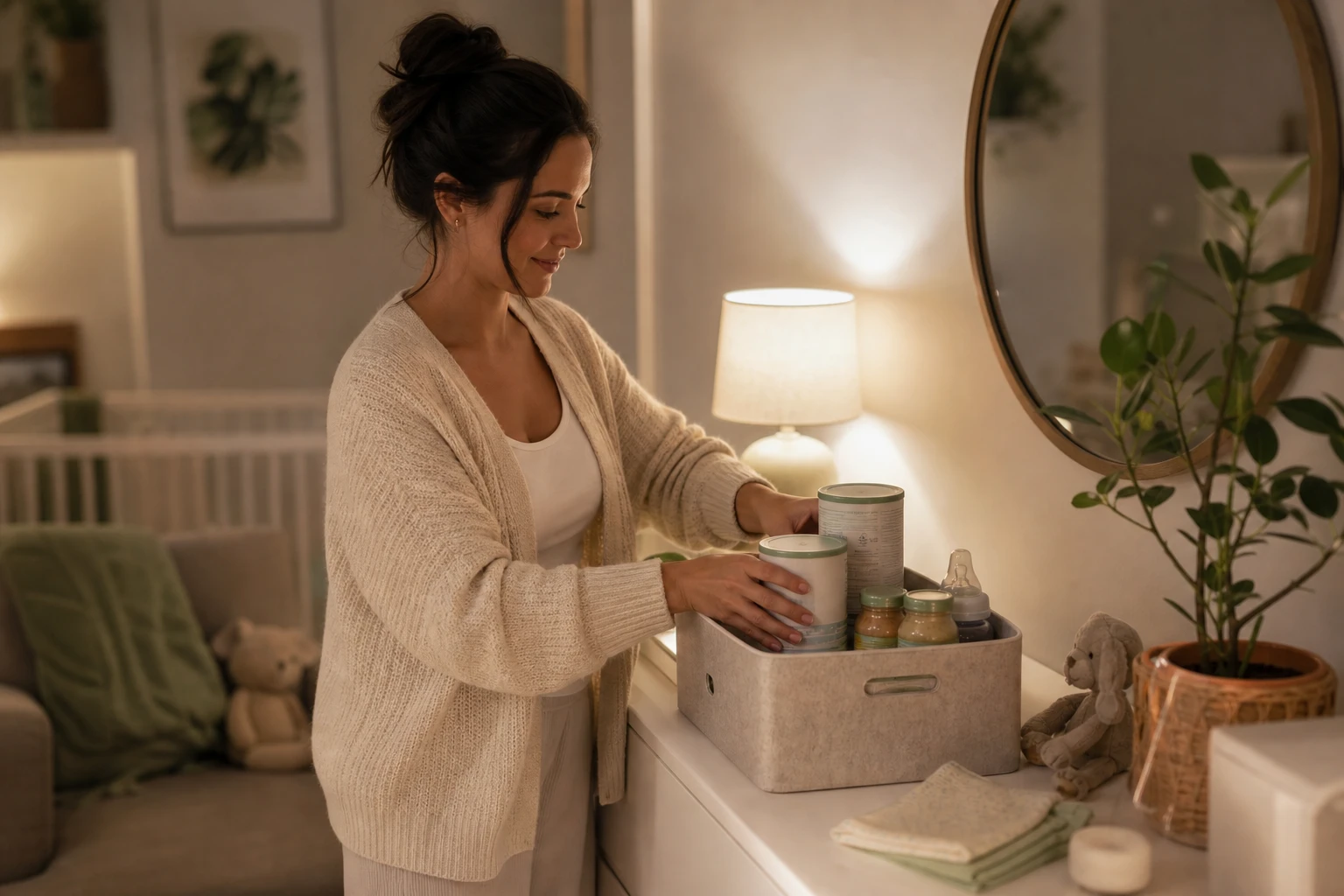
Every emergency checklist says "add supplies for infants," and then moves on, as if you can eyeball two weeks of formula. You cannot, and a baby is the one member of the household who cannot flex to whatever is in the pantry. Their supply chain is exact, and it is measured in cans, ounces, and diaper counts.
So here are the actual numbers. A formula-fed infant needs roughly one 12.4 oz can of powdered formula every 3 days, which makes the two-week target 5 cans, plus dedicated water to mix it. Everything else scales from that same two-week frame.
The two-week baby supply, by the numbers
| Supply | Two-week amount | Notes |
|---|---|---|
| Powdered formula | 5 cans (12.4 oz) | ~90 oz prepared per can; babies drink 24 to 32 oz per day |
| Water for mixing and washing | 8 to 10 gallons | On top of the household's 1 gallon per person per day |
| Diapers | Newborn: 140 / 6 mo+: 80 to 100 | 8 to 10 per day drops to 6 to 8 |
| Wipes | 4 to 5 packs | Doubles as everyone's no-shower hygiene |
| Baby food (6 to 12 mo) | 35 to 45 jars or pouches | 2 to 3 per day |
| Infant medicine | Acetaminophen or ibuprofen (age-appropriate), saline drops, thermometer | Check dosing chart is in the kit |
| Comfort | 2 pacifiers, a spare lovey, small toys | Morale is a supply too |
Breastfeeding changes the math but does not zero it: a nursing parent needs an extra half gallon of water and roughly 500 extra calories per day (the same adjustment CDC guidance makes for pregnancy and nursing), and a backup can of formula is cheap insurance against stress-related supply dips.
Food and water calculator
How much food and water does your household need?
Adults
Children
For how long
You'd need
98,000calories
plus 56 gallons of water, around $185 to buy.
For 2 adults, 2 children, 2 weeks.
That's the target. Provision Planner counts what you already have and shows you what's left to buy.
See how close you areThe formula-and-water rules that matter in an outage
Powdered formula is not sterile, and emergencies compromise water. Three rules keep bottle prep safe when the tap is questionable:
- Use bottled water first for mixing. If none is available, boiled and cooled water. The purification hierarchy for everything else is in our water storage guide.
- Mix one bottle at a time. Prepared formula needs refrigeration you may not have; powder does not. Ready-to-feed bottles are the premium no-water backup, and a 6-pack in the kit earns its cost.
- Wash like it matters, because it does. Bottle brush, dish soap, and a basin belong in the supply bin; wipes and sanitizer cover hands when water is rationed.
Unopened formula cans last about a year. That short shelf life makes rotation non-negotiable: the emergency cans are simply next month's cans, replaced as bought.
The baby go bag
If your family keeps 72-hour kits, the baby gets a bag too, packed for whoever is carrying it: 2 cans of formula or a ready-to-feed 6-pack, bottles, 25 to 30 diapers, 2 packs of wipes, 3 clothing changes (sized up), a warm layer, medicine, and 2 pacifiers. Rotate the clothes with the seasons; babies outgrow their go bag twice a year.
One more line for the family emergency plan: a printed card with the baby's pediatrician, dosing weights, allergies, and feeding schedule, in case someone else ends up doing a handoff or a shelter intake asks.
The shelf-life treadmill nobody warns you about
Here is the honest problem with baby preparedness: it expires faster than any other supply in your house, and the baby keeps changing the requirements. Formula lasts a year, baby food less, the diapers stop fitting in eight weeks, and the 3-month clothes in the go bag are a memory by fall. A baby supply is not a project you finish; it is a subscription you manage.
That treadmill is what Provision Planner was built to run. Scan in the formula, jars, and diaper counts once, set who is in your household, and it tracks expirations and days-of-supply continuously, so the answer to "are we still covered for two weeks?" stays current while the baby, and everything they need, keeps changing underneath you.
Frequently asked questions
- What emergency supplies does a baby need for two weeks?
- Enough formula (or a nursing plan), clean water to mix it, two weeks of diapers and wipes, baby food jars if weaning, medications, and a change of clothes. Add these to the household's regular two-week supply.
- How much formula and water should you store for an infant?
- Store at least a two-week supply of your baby's exact formula plus extra sealed water for mixing, since powdered formula needs safe water. Never dilute formula to stretch it, and rotate cans well before their expiration dates.
- What goes in a baby's emergency go-bag?
- Ready-to-feed formula (no mixing needed), bottles, diapers and wipes, a change of clothes, a blanket, infant medications and a thermometer, and a carrier. Ready-to-feed formula is worth the cost in a go-bag because it needs no water.
You did the reading. Now get your number.
Provision Planner does this article's math for your real household, automatically, and keeps it current as supplies come and go.